They Were Trying to Make Fancy Wallpaper. Instead, They Invented the World's Most Satisfying Packaging Material.
They Were Trying to Make Fancy Wallpaper. Instead, They Invented the World's Most Satisfying Packaging Material.
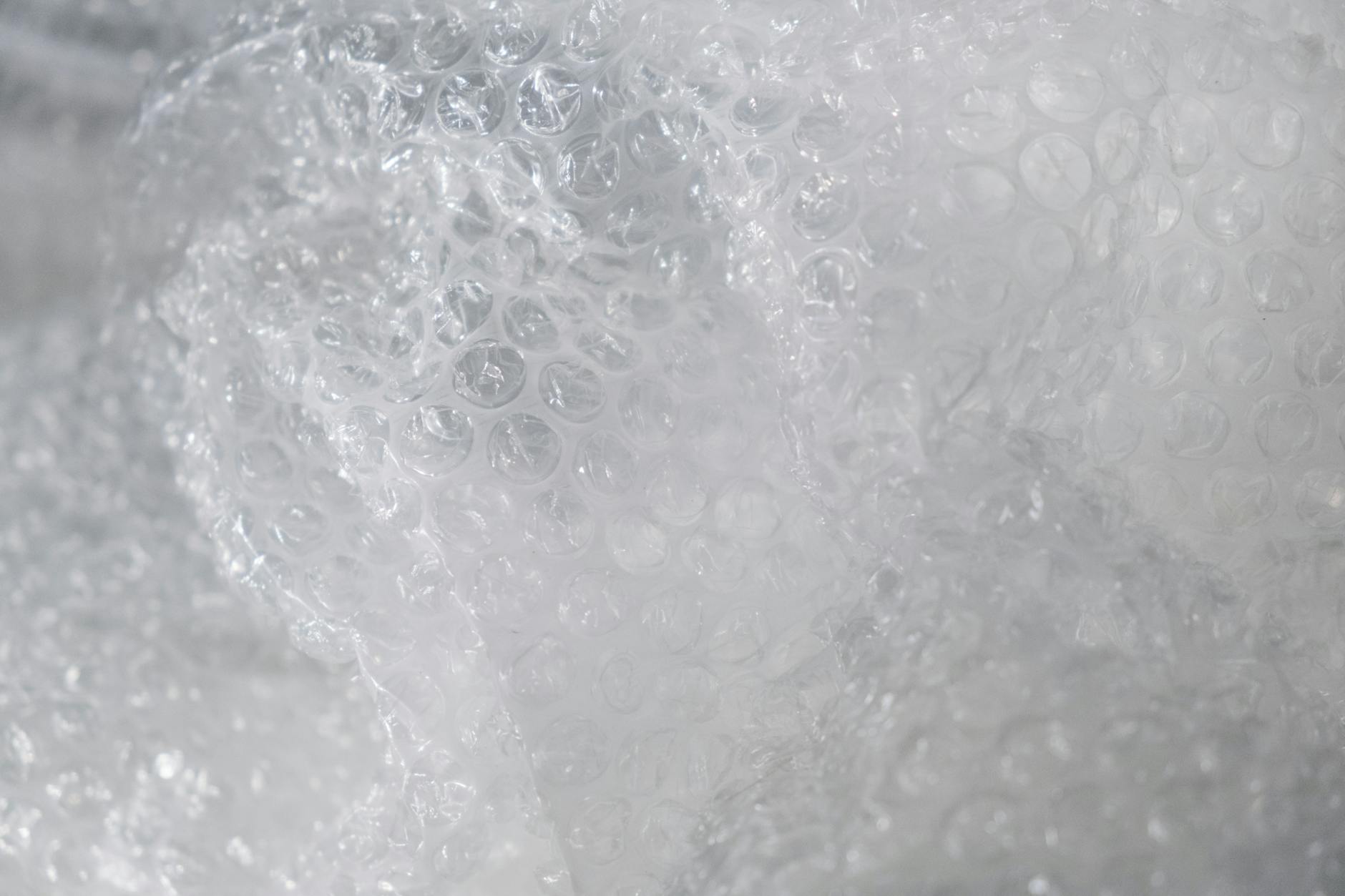
If you've ever peeled back a sheet of bubble wrap and spent the next ten minutes methodically popping every single cell — don't worry, you're in good company. Americans pop, ship, and obsess over this stuff by the billions of square feet every year. But here's the thing almost nobody knows: bubble wrap was never supposed to be bubble wrap. It was supposed to be wallpaper.
Yes, wallpaper.
Two Engineers, Two Shower Curtains, and a Very Strange Idea
The year was 1957. Alfred Fielding and Marc Chavannes were working together in a garage in Hawthorne, New Jersey, chasing what seemed like a genuinely promising idea. Textured wallpaper was having a moment — or at least, they thought it was about to. The two engineers sealed two plastic shower curtains together, trapping air bubbles between the layers, and stepped back to admire their creation.
What they had made was... lumpy. Weird-looking. Not exactly the kind of thing you'd put up in your living room. The textured wallpaper concept went nowhere fast. But Fielding and Chavannes weren't ready to walk away from the material itself. They'd created something unusual, something that had a satisfying give to it, and they were convinced it had a use — they just hadn't figured out what that use was yet.
In 1960, the two inventors founded Sealed Air Corporation and filed a patent for their bubble-covered plastic. Now they just needed someone to actually want it.
The IBM Connection That Changed Everything
For a few years, Sealed Air pitched their product in some unexpected directions. One early idea was to use it as greenhouse insulation — the trapped air bubbles could theoretically provide thermal protection for plants. That didn't exactly take off either.
Then came the pitch that finally stuck. In 1961, Sealed Air approached IBM, which had just started shipping its new 1401 computer — a machine roughly the size of a refrigerator that cost more than most American homes at the time. Fragile, expensive, and desperately in need of reliable protective packaging during transport. Bubble wrap turned out to be exactly what IBM needed.
That single account changed the company's trajectory overnight. Here was a product that could cushion delicate equipment, absorb shock during shipping, and keep expensive machinery from arriving in pieces. The packaging industry hadn't seen anything quite like it.
NASA Came Knocking Next
Word spread quickly through industries that dealt in fragile, high-value goods. NASA — deep in the middle of the Space Race and shipping extraordinarily sensitive equipment between facilities — began exploring bubble wrap as an insulating material. The same air-pocket structure that made it good at absorbing impact also made it useful for thermal insulation in certain applications.
The NASA connection gave Sealed Air a kind of credibility that no marketing campaign could have bought. If it was good enough for space equipment, it was good enough for anything.
Through the 1960s and into the 1970s, bubble wrap quietly became the go-to solution for anyone shipping something breakable. Electronics companies, medical equipment manufacturers, art galleries, antique dealers — they all came around to the same conclusion. This strange, accidental material was the best thing available.
From Shipping Rooms to Living Rooms
By the 1980s, bubble wrap had crossed a cultural threshold. It wasn't just a practical product anymore — it had become something people actively enjoyed. The satisfying pop of each bubble took on a life of its own. Office workers kept sheets of it at their desks. Kids begged for it at Christmas. It started showing up in stress-relief conversations long before anyone had coined the phrase "stress relief product."
Sealed Air leaned into this. The company recognized that the tactile experience of bubble wrap was part of its appeal, and they weren't wrong. Studies have since suggested that popping bubble wrap produces a measurable reduction in tension — something that anyone who's ever worked through a full sheet during a stressful afternoon could have told you for free.
Today, Sealed Air is a multi-billion dollar company, and bubble wrap remains one of its signature products. The material has evolved — there are now flat-pack versions that inflate on demand, specialty sizes for different products, and biodegradable alternatives — but the core concept is identical to what two engineers accidentally stumbled onto in a New Jersey garage more than sixty years ago.
The Invention That Refused to Be Useless
What makes the bubble wrap story genuinely interesting isn't just the accidental origin — it's the persistence. Fielding and Chavannes could have written off their lumpy shower curtain experiment as a failed prototype and moved on. Instead, they spent years searching for the right application, pitching to anyone who would listen, until the product finally landed where it belonged.
There's a version of history where bubble wrap never makes it out of that New Jersey garage. Where the wallpaper pitch fails and the inventors cut their losses. Instead, it became one of the most recognizable materials on earth — and a strange, deeply satisfying piece of everyday American life.
Next time you tear into a package and find a sheet waiting for you, remember: someone once tried to hang that stuff on a wall.