The Great Clock Face Debate
In 1905, a heated debate raged through American engineering circles about the future of timekeeping. Progressive engineers and efficiency experts argued that traditional round clock faces were relics of an outdated era—imprecise, difficult to read quickly, and unsuited for the modern industrial age. They pushed for numerical displays, linear time indicators, and other "scientific" approaches to showing time.
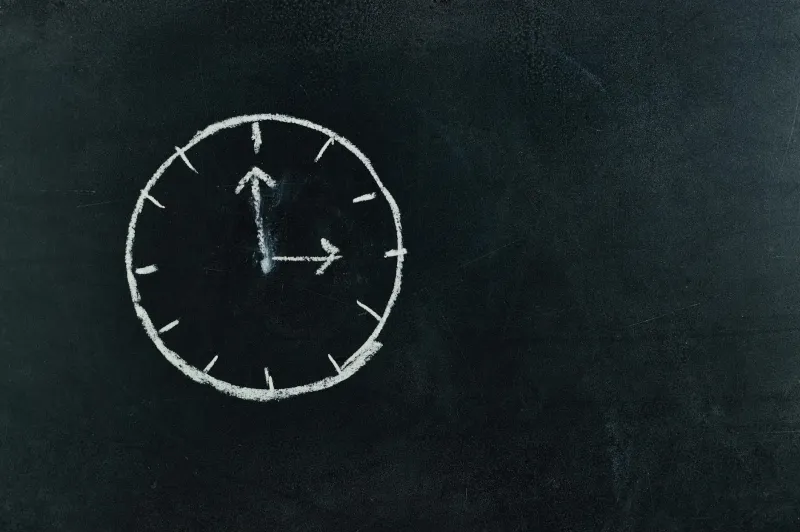
The round clock face, they argued, was a medieval holdover that forced people to perform mental calculations to determine exact time. Why should someone have to figure out that the big hand pointing to the 6 meant "30 minutes" when you could simply display "10:30" in clear numbers?
This wasn't just academic debate. Major clock manufacturers were actively developing alternatives, and several large institutions—including railroad companies and factories—were experimenting with digital-style displays that showed time in pure numerical format.
The Efficiency Movement's War on Tradition
The early 1900s marked the height of America's efficiency movement, led by industrial engineers like Frederick Winslow Taylor. These efficiency experts analyzed every aspect of American life, from factory workflows to office procedures, searching for ways to eliminate wasted time and mental effort.
Clock reading became a target because efficiency experts calculated that the average American spent several seconds multiple times per day interpreting analog clock faces. Multiply those seconds across millions of workers, they argued, and traditional clocks were costing the American economy thousands of hours of productivity annually.
Several prominent manufacturers began producing "modern" timepieces for schools and offices. These featured linear displays where time moved along a straight track, numerical readouts similar to today's digital clocks, and even experimental color-coded systems where different times of day were represented by different colored zones.
The Stubborn Clockmaker
The analog clock face might have disappeared entirely if not for a stubborn Massachusetts clockmaker named Seth Thomas (the company, not the original founder who had died decades earlier). While competitors rushed to develop modern alternatives, Seth Thomas Clock Company doubled down on traditional round faces.
Their reasoning wasn't sentimental—it was economic. Retooling their entire manufacturing operation for new display systems would cost a fortune, and they weren't convinced the market really wanted change. More importantly, they had contracts with school districts across New England that specifically required "traditional clock faces" because teachers insisted students needed to learn "proper" time-telling skills.
Seth Thomas executives made a calculated gamble: they would continue mass-producing analog clocks while competitors spent money developing alternatives. If the new designs failed to catch on, Seth Thomas would be positioned to capture the entire market.
The School District Rebellion
What efficiency experts hadn't anticipated was fierce resistance from American educators. Teachers argued that learning to read analog clocks was crucial for developing spatial reasoning, mathematical thinking, and mental calculation skills. The process of figuring out that the little hand between 10 and 11, with the big hand on 6, meant "10:30" was educational, not inefficient.
School districts began explicitly requesting analog clocks for their buildings, arguing that students needed to master traditional time-telling before moving to simplified numerical displays. This created a massive institutional market for round clock faces just as manufacturers were trying to phase them out.
The resistance was particularly strong in elementary schools, where teachers insisted that the visual and spatial aspects of analog clocks helped children understand the concept of time passage in ways that numerical displays couldn't match. Watching clock hands move gave students an intuitive sense of time's flow that numbers alone couldn't provide.
The Factory Floor Reality Check
Meanwhile, the "modern" clock experiments in industrial settings were revealing serious practical problems. Workers found numerical time displays harder to read at a glance, especially in poor lighting conditions. The linear and color-coded systems proved confusing and required training that slowed down operations.
More critically, analog clocks provided visual information that numerical displays couldn't match. A quick glance at clock hands immediately showed workers how much time remained until break, how long they'd been working on a task, and whether they were ahead or behind schedule. This spatial information was lost with numerical displays.
Factory managers began requesting analog clocks again, not because they were traditional, but because they were actually more functional for their specific needs.
The Accidental Standardization
By 1915, something unexpected had happened. While engineers continued developing alternative time displays, the combination of school district demands, factory preferences, and Seth Thomas's manufacturing capacity had created an accidental standardization around analog clocks.
The company was producing round clock faces so cheaply and efficiently that other manufacturers found it difficult to compete, even with their "superior" modern designs. Schools were buying analog clocks in massive quantities, creating economies of scale that made them even more affordable.
This economic reality killed most alternative clock designs before they could gain widespread adoption. It simply became too expensive for institutions to choose anything other than traditional analog clocks.
The Educational Entrenchment
The most crucial factor in preserving analog clocks was their integration into American education. By 1920, virtually every American classroom featured a prominent analog clock, and "telling time" had become a standard part of elementary curriculum.
Generations of American children learned to associate the round clock face with the fundamental skill of time-telling. This created a cultural expectation that "real" clocks had hands and numbers arranged in a circle. Even as digital technology advanced throughout the 20th century, this educational foundation kept analog clocks relevant.
Teachers developed entire pedagogical approaches around analog clocks—using them to teach fractions (half past, quarter past), spatial relationships (clockwise, counterclockwise), and even basic geometry (angles, degrees, circular measurement).
The Digital Revolution's Surprising Outcome
When digital clocks became cheap and widely available in the 1970s and 1980s, many predicted the final demise of analog timepieces. Instead, something interesting happened: digital clocks found their niche for precise timekeeping, while analog clocks remained dominant in educational and public settings.
American schools continued using analog clocks specifically because they were educational tools, not just timepieces. The "inefficiency" that early engineers wanted to eliminate had become a feature, not a bug.
The Modern Classroom Standard
Today, walk into any American elementary school, and you'll find analog clocks in virtually every classroom. Despite smartphones, tablets, and digital displays everywhere, children still learn to tell time using the same round clock faces that engineers tried to eliminate over a century ago.
The irony is remarkable: the clock design that efficiency experts considered obsolete in 1905 survived because one manufacturer was too stubborn to change, and educators recognized that "inefficiency" could be educational. What nearly disappeared became permanently embedded in American childhood education.
Every American child who learns to read time by figuring out where the big hand and little hand point is participating in an educational tradition that accidentally survived a technological revolution designed to eliminate it.