The Sound Nobody Asked For
Every morning, millions of Americans are jolted awake by the same harsh, metallic buzzing. It's a sound so universally despised that entire industries have sprung up trying to replace it with gentler alternatives. Yet this annoying buzz has dominated American bedrooms for over a century, becoming as much a part of the morning routine as coffee or brushing teeth.
What most people don't realize is that this infamous alarm clock sound was originally such a commercial failure that its creator, Levi Hutchins, couldn't convince a single manufacturer to buy his design.
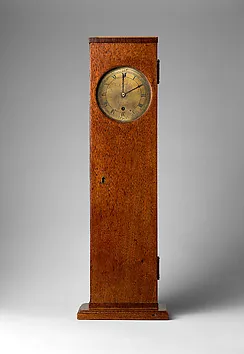 Photo: Levi Hutchins, via images.metmuseum.org
A Clockmaker's Personal Problem
In 1787, Hutchins was a 26-year-old clockmaker in Concord, New Hampshire, with a very specific problem: he kept oversleeping. His job required him to wake up at 4 AM every day, but without any reliable way to rouse himself, he was constantly running late.
 Photo: Concord, New Hampshire, via c8.alamy.com
Hutchins decided to solve his problem by modifying a traditional brass clock. He rigged a simple mechanism that would trigger a bell to ring at exactly 4 AM. The device worked perfectly for his needs, but when he tried to market it to other clockmakers, he hit a wall.
The issue wasn't the concept—people understood the value of a mechanical wake-up device. The problem was the sound itself.
The Frequency of Frustration
Hutchins' original design produced a sharp, penetrating tone that cut through sleep like a knife. The frequency—around 1000 Hz—was specifically chosen because it falls within the range where human hearing is most sensitive. While this made it effective at waking people up, it also made it incredibly unpleasant to listen to.
Manufacturers rejected the design repeatedly. They worried that customers would associate their brand with such an irritating sound. Some suggested softer chimes or melodic tunes instead, but Hutchins insisted that pleasant sounds wouldn't reliably wake heavy sleepers.
For nearly 90 years, Hutchins' alarm concept remained a curiosity rather than a commercial product.
The Industrial Revolution Changes Everything
By the 1870s, America was transforming. The Industrial Revolution had created millions of factory jobs with strict start times. Railroad schedules demanded punctuality. The growing middle class needed reliable ways to wake up for increasingly structured workdays.
Seth Thomas, a Connecticut clockmaker, finally recognized the market potential. He acquired the rights to Hutchins' design and began mass-producing alarm clocks. But he made one crucial change: he refined the buzzing mechanism to create an even more penetrating sound.
 Photo: Seth Thomas, via ebth-com-production.imgix.net
Thomas discovered that the most effective wake-up frequency wasn't just loud—it had to be actively annoying. Pleasant sounds, even loud ones, could be incorporated into dreams. But harsh, mechanical buzzing triggered an immediate stress response that forced the brain into consciousness.
The Psychology of the Buzz
Modern sleep researchers have confirmed what Thomas intuited: the alarm clock buzz works precisely because it's unpleasant. The sound activates the amygdala, the brain's alarm center, creating a mild fight-or-flight response that ensures wakefulness.
The specific frequency range—between 500 and 3000 Hz—was no accident. This range includes the frequencies of human screams and crying babies, sounds that evolution has wired us to respond to immediately. By mimicking these natural alarm signals, the mechanical buzz hijacks our biological wake-up systems.
From Luxury to Necessity
By 1900, alarm clocks had become standard equipment in American homes. The harsh buzz that once seemed too annoying to sell had become the sound of productivity and responsibility. Workers who owned alarm clocks were seen as more reliable, and employers began expecting punctuality that was impossible without mechanical assistance.
The alarm clock industry boomed, but the basic sound remained unchanged. Manufacturers experimented with different tones, volumes, and patterns, but they always returned to variations of Hutchins' original harsh buzz.
The Unintended Cultural Impact
The widespread adoption of alarm clocks didn't just change how Americans woke up—it fundamentally altered the relationship between work and rest. Before mechanical alarms, people generally woke with the sun and slept when darkness fell. The alarm clock enabled shift work, early commutes, and the rigid scheduling that defines modern life.
The buzz also became a cultural symbol. In movies and television, the alarm clock's harsh sound instantly communicates the drudgery of routine work life. The phrase "beating the buzzer" entered American English, referring to completing tasks just before deadlines.
The Sound That Won't Die
Today, despite smartphones offering thousands of wake-up sounds, millions of Americans still choose variations of the classic buzz. Sleep apps and smart devices regularly include "traditional alarm" options that recreate the harsh mechanical sound.
Some researchers argue that our continued preference for annoying alarms reflects a cultural masochism—we've been conditioned to believe that waking up should be unpleasant. Others suggest that the buzz simply works too well to abandon.
The Irony of Success
Levi Hutchins died in 1865, decades before his invention became a commercial success. He never earned a penny from the alarm clock industry that his rejected design eventually created. The sound that manufacturers once considered too irritating to sell became so embedded in American culture that we can barely imagine mornings without it.
In the end, the most annoying sound ever invented succeeded precisely because it was so annoying. Sometimes the things we hate most become the things we can't live without.