Bell Wanted 'Ahoy.' Edison Wanted 'Hello.' One Man Won — and Changed How Americans Talk Forever.
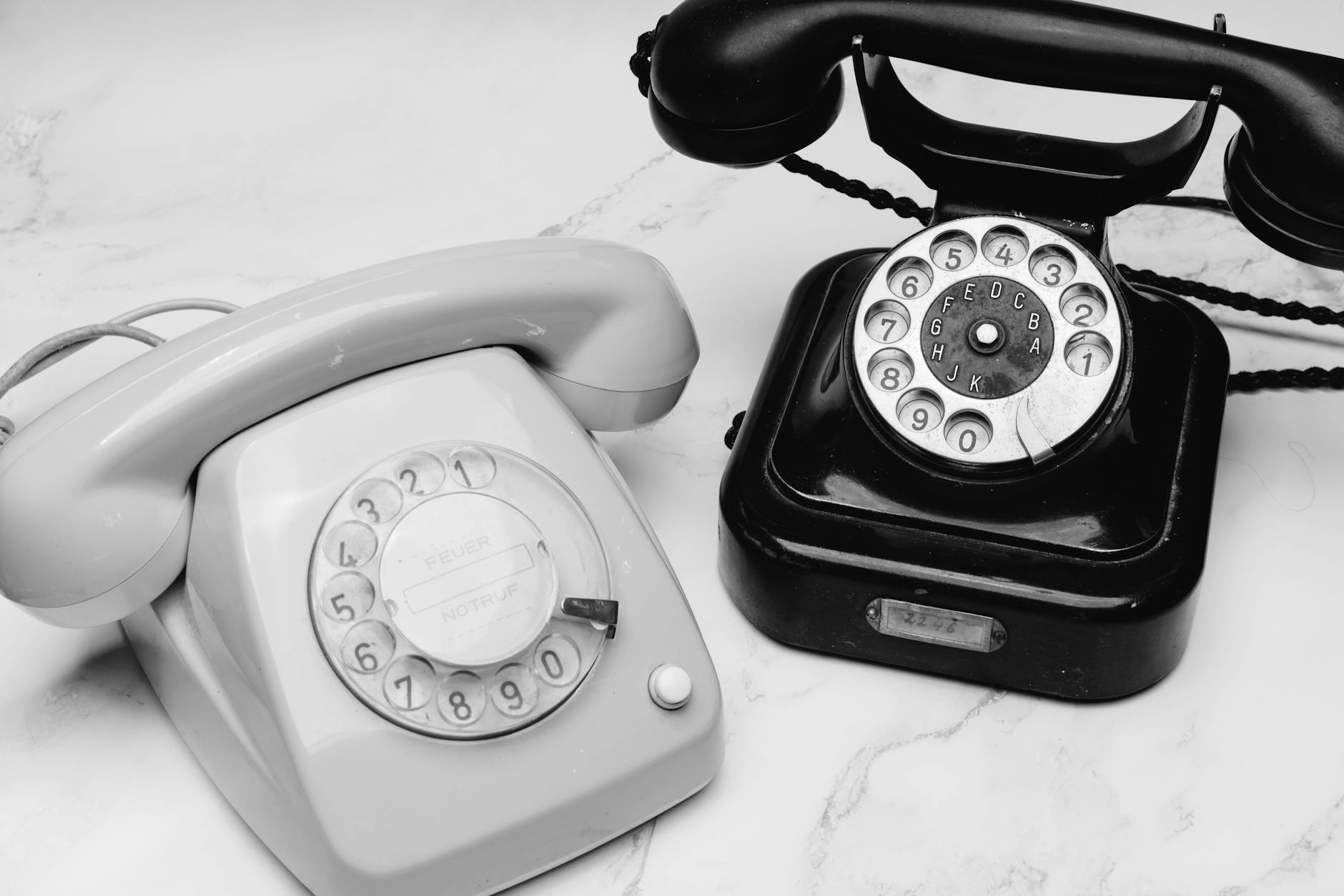
Bell Wanted 'Ahoy.' Edison Wanted 'Hello.' One Man Won — and Changed How Americans Talk Forever.
Think about the last time you answered your phone. You probably didn't hesitate. You didn't weigh your options. You just said it — hello — automatically, reflexively, the way you'd say "ouch" if you stubbed your toe. It's that deeply wired into American behavior.
But here's a question worth sitting with: why hello?
Of all the words in the English language, why is that the one that kicks off every phone conversation? Why not "yes" or "speak" or something more obviously functional? And why does it feel so natural when, historically speaking, it's an extremely recent habit — one that was actively chosen by a specific person, for specific reasons, during a window of time when the whole thing could easily have gone a different direction?
The answer takes you back to the 1870s, to two men who disagreed about almost everything — and whose argument over a single word quietly rewired the way hundreds of millions of people begin every conversation to this day.
Before the Phone, 'Hello' Barely Existed
This is the part of the story that tends to stop people cold: before the telephone was invented, hello was not a common word.
It existed in a loose form — variations like "hullo" and "hallo" showed up in English texts going back centuries, usually as expressions of surprise or as calls to attract attention across a distance. Think of a ferryman being hailed across a river. It was a shouting word, not a greeting word. It wasn't something you'd say to a person standing in front of you.
The more standard greetings of the 19th century were things like "good morning," "good day," or simply "yes" — functional, polite, contextual. "Hello" was informal to the point of being slightly rude in certain social contexts.
All of that was about to change, because of a device that needed a word to start with.
The Invention and the Problem It Created
Alexander Graham Bell patented the telephone in 1876, and almost immediately ran into a social problem that nobody had anticipated: when two people connected over a telephone line, how were they supposed to signal that they were ready to talk?
With a letter, you just started writing. In person, you made eye contact. But over a telephone line, you couldn't see the other person, and early telephone technology meant you couldn't always tell if the line was live. You needed an opening signal — something both parties understood as "I'm here, the line is open, begin."
Bell had a suggestion. He thought the answer was ahoy — a nautical hailing call that had been used by sailors for centuries to get the attention of another vessel. It was loud, it carried well, and it had an established meaning as a long-distance attention signal. Bell liked it, used it himself, and reportedly advocated for it as the standard telephone greeting.
Thomas Edison disagreed.
Edison's Campaign for a Different Word
Edison was working on telephone improvements in the late 1870s — specifically on the carbon microphone, which dramatically improved the device's sound quality — and he had strong opinions about how the telephone should be used. In an 1877 letter to David Hughes, president of the Central District and Printing Telegraph Company in Pittsburgh, Edison proposed a specific opening word for telephone operators: hello.
His reasoning was practical. "Hello" was short, punchy, and easily understood over a crackly early telephone line. It was hard to mishear. It demanded a response. And it was distinctive enough that hearing it would immediately signal "someone is trying to speak to you" rather than being confused with background noise or conversation.
Edison pushed his preference actively. When the first commercial telephone exchange opened in New Haven, Connecticut in 1878, the instructions given to operators — the people who connected calls for paying customers — included Edison's suggested greeting. Those operators answered calls with "hello."
And just like that, the word was in the system.
How a Word Becomes a Reflex
The telephone spread fast. By the early 1880s, exchanges were operating in cities across the United States. Every operator in every exchange was answering calls with "hello." Every caller who connected heard "hello" first and instinctively mirrored it back. The habit compounded with every call, every day, in every city.
Language is like water — it takes the path of least resistance, and once a usage pattern is established at scale, it becomes almost impossible to reroute. "Hello" wasn't legislated or formally standardized. It just won, the way formats win: by being in the right place at the right time, adopted by the infrastructure that most people were using.
Bell's "ahoy" never had a chance. It was proposed but never institutionalized. By the time anyone thought to have the debate seriously, hello was already everywhere.
The Word Escapes the Phone
Here's where the story gets genuinely interesting. Once "hello" was established as the standard telephone greeting, it didn't stay inside the phone call. It started leaking into everyday face-to-face conversation.
Throughout the late 19th and early 20th centuries, "hello" shifted from a telephone-specific term to a general all-purpose greeting. The familiarity people felt with the word from their phone habits transferred to their social interactions. By the 1920s and 30s, it was completely normal to say hello to someone you passed on the street — something that would have seemed slightly odd or informal a few decades earlier.
The telephone didn't just give America a phone greeting. It gave America one of its most common everyday words.
One Man's Preference, Millions of Conversations
What's striking about this story isn't the drama of it — it's actually a pretty quiet piece of history. Edison didn't win a battle. He didn't outmaneuver Bell in a public debate. He just wrote a letter suggesting a word to a telegraph company, and the word stuck because it was practical and the timing was right.
But the downstream effects of that single preference are almost impossible to calculate. Every phone call in American history — every "hello?" called out into a receiver, every voicemail greeting, every customer service opening, every late-night call between people who miss each other — carries a faint echo of Edison's 1877 recommendation.
Bell, for his part, reportedly used "ahoy" on the telephone for the rest of his life.
Some people never do update their habits. But the rest of us? We say hello.