The Gross Discovery Nobody Knew What to Do With
In 1827, German scientists Friedrich Tiedemann and Leopold Gmelin made a discovery that would disgust their colleagues and mystify researchers for the next century and a half. While studying digestive chemistry, they isolated a peculiar compound from ox bile—a yellowish, bitter substance they named "taurine" after "taurus," the Latin word for bull.
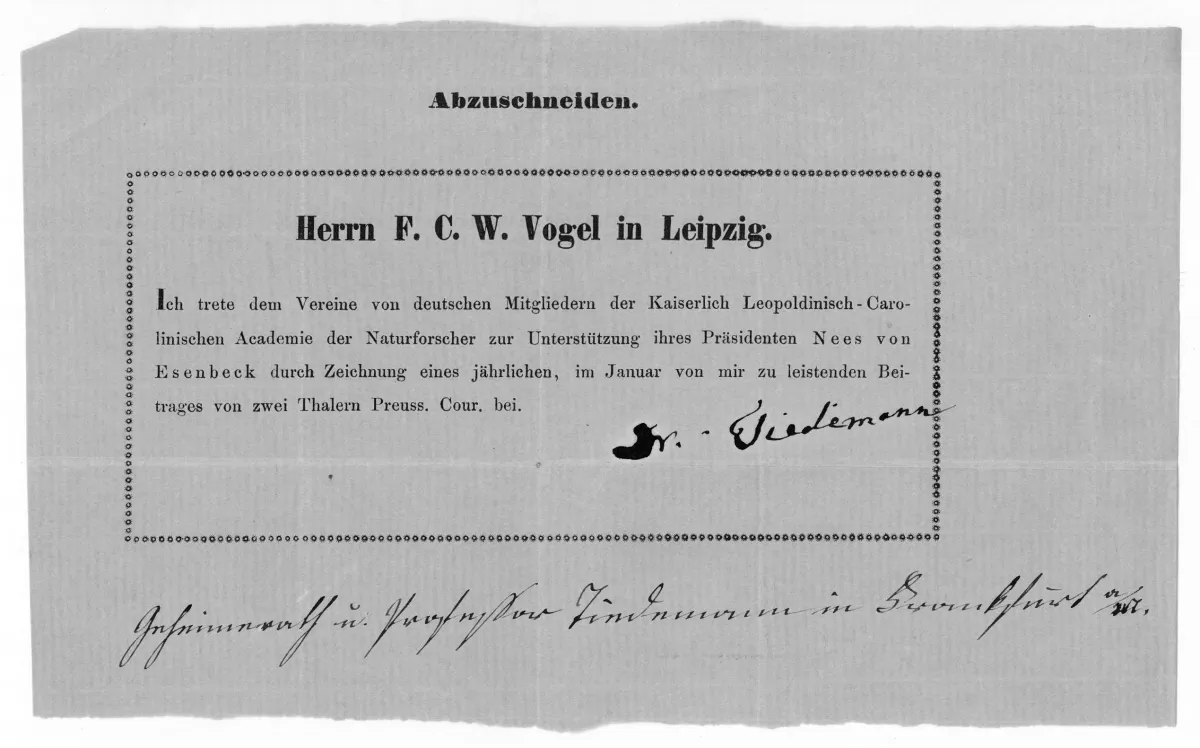 Photo: Friedrich Tiedemann, via www.kotte-autographs.com
Their finding was published in obscure German medical journals and promptly forgotten. For 150 years, taurine remained a laboratory curiosity with no apparent use beyond satisfying scientific curiosity about animal digestion. American researchers occasionally encountered it in biochemistry textbooks, but nobody could figure out what to do with bull bile extract.
That changed in the 1970s when Japanese pharmaceutical companies began desperately searching for compounds to combat a growing national health crisis: industrial worker fatigue.
Japan's Exhausted Workers and a Forgotten Compound
Post-war Japan's economic miracle came with a hidden cost. Factory workers were collapsing from exhaustion, and traditional stimulants like caffeine weren't providing sustainable energy. Japanese pharmaceutical company Taisho needed something new, something that could boost energy without the crashes associated with existing stimulants.
Dr. Akira Fujiwara, a biochemist at Taisho, was systematically testing forgotten compounds from medical literature when he stumbled across taurine. Initial tests on laboratory animals showed promise—the compound seemed to improve muscle function and reduce fatigue without the jittery side effects of caffeine.
In 1976, Taisho released "Lipovitan-D," the world's first taurine-based energy tonic. Marketed to exhausted Japanese salarymen, it became an instant hit. The small brown bottles promised "fighting spirit" and "stamina recovery," and Japanese workers lined up to buy them by the case.
The Austrian Who Brought Bull Bile to America
Austrian entrepreneur Dietrich Mateschitz discovered Lipovitan-D during a business trip to Thailand in 1982. Suffering from jet lag, he tried the local version of the Japanese tonic and was amazed by the results. He felt alert, focused, and energized without the usual caffeine crash.
 Photo: Dietrich Mateschitz, via www.markingthespot.com
Mateschitz tracked down the formula and discovered taurine—the same compound German scientists had extracted from ox bile 155 years earlier. He partnered with Chaleo Yoovidhya, the Thai businessman who had adapted Lipovitan-D for Southeast Asian markets, and together they refined the formula for Western tastes.
In 1987, they launched Red Bull in Austria. The drink contained 1,000 milligrams of taurine per can—roughly the same amount found in a pound of raw beef. American consumers had no idea they were drinking a refined version of bull bile extract.
The Invasion of American Convenience Stores
Red Bull entered the American market in 1997, but the FDA was initially skeptical. Taurine had never been approved as a food additive in the United States, and regulators weren't sure what to make of this European drink that claimed to "give you wings."
After extensive testing, the FDA concluded that taurine was safe for consumption and granted approval. Red Bull's American launch coincided with the rise of extreme sports culture, and the brand's marketing genius was positioning taurine-enhanced energy as fuel for adventure rather than medicine for exhaustion.
The strategy worked. Within five years, Red Bull had spawned an entire American energy drink industry. Monster, Rockstar, and dozens of competitors all included taurine in their formulas, turning the forgotten German discovery into a billion-dollar ingredient.
The Compound That Built an Empire
Today, Americans consume over 3 billion energy drinks annually, and nearly every major brand contains taurine. The compound that sat unused in German medical journals for 150 years now generates over $15 billion in annual U.S. sales.
Modern taurine is synthesized rather than extracted from animal bile—a relief to consumers who might be less enthusiastic about energy drinks if they knew the original source. But the basic compound remains identical to what Tiedemann and Gmelin isolated from ox digestive systems in their 1827 laboratory.
The irony isn't lost on biochemists: the most successful energy supplement in American history was discovered by accident, ignored for a century and a half, and only found its market because Japanese workers were too exhausted to function. Sometimes the most revolutionary discoveries are hiding in the most unlikely places—even in bull bile that nobody wanted to think about.
Every time an American cracks open an energy drink before a workout or late-night study session, they're benefiting from a German discovery that spent 150 years waiting for someone to figure out what it was good for. That's the power of scientific curiosity—even when the results seem utterly useless at the time.