The Protein Problem
In the early 1900s, American dairy farmers faced a peculiar waste problem. After processing milk into butter and cheese, they were left with massive quantities of casein—a protein that separated out during production. Most farmers simply dumped this white, sticky substance or fed it to livestock. Nobody imagined that this agricultural waste would eventually become one of America's most recognizable consumer products.
The story begins with a struggling adhesive company called the Borden Chemical Company, a subsidiary of the famous Borden dairy empire. In the 1940s, they were desperately searching for new revenue streams as wartime material shortages made their traditional industrial adhesives expensive and difficult to produce.
From Cow to Chemistry Lab
Borden's chemists started experimenting with casein simply because they had unlimited access to it through their parent company's dairy operations. What they discovered was remarkable: when properly processed, this milk protein created an adhesive that was strong enough for serious applications but gentle enough to be completely safe.
The breakthrough came when they figured out how to stabilize the casein and mix it with other compounds to create a consistent, long-lasting adhesive. Unlike the harsh industrial glues of the era, this new formula was non-toxic, had virtually no odor, and washed off hands and clothes with simple soap and water.
Initially, Borden marketed this casein-based adhesive for industrial applications—bookbinding, woodworking, and packaging. But the real revolution happened when someone realized this glue was perfect for a market nobody had considered: children.
The School Supply Revolution
Post-World War II America was experiencing an education boom. New schools were opening everywhere, and teachers were looking for safe, reliable supplies for increasingly hands-on learning approaches. Traditional adhesives were either too dangerous for children or too expensive for school budgets.
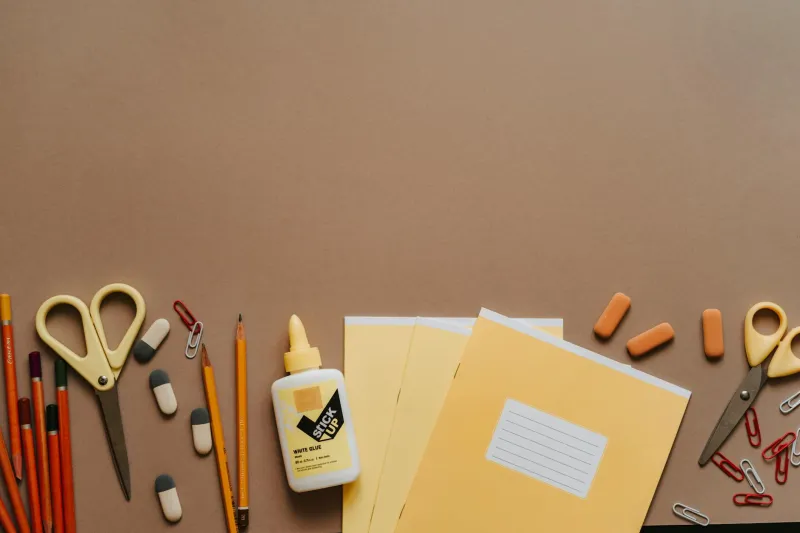
Elmer's Glue-All, launched in 1947, solved both problems perfectly. Teachers could hand bottles directly to children without safety concerns, and schools could afford to stock it in every classroom. The white color meant teachers could see exactly where students had applied it, and mistakes could be easily corrected.
But the real genius was in the packaging and marketing. Borden created "Elmer the Bull" as their mascot—a friendly cartoon character that made the product approachable for children. The distinctive orange cap and white bottle became instantly recognizable, and the squeeze bottle design gave kids the control they needed for detailed projects.
The Craft Culture Explosion
What Borden couldn't have predicted was how Elmer's Glue would help create an entirely new consumer category: home crafting. As American families moved to the suburbs in the 1950s and 1960s, parents were looking for activities to keep children occupied. Art projects and crafts became a staple of American childhood.
Elmer's Glue was perfectly positioned for this cultural shift. It was safe enough for unsupervised use, versatile enough for countless projects, and cheap enough that parents didn't worry about waste. Children could use it for everything from paper crafts to science fair projects to repairing broken toys.
The product accidentally became the foundation of American DIY culture. Scout troops, church groups, summer camps, and family activities all revolved around projects that required safe, reliable adhesive. Elmer's wasn't just selling glue; they were enabling an entire generation of hands-on learning.
The Slime Revolution
Perhaps the most unexpected development came in the 1990s when children discovered that mixing Elmer's Glue with common household items created "slime"—a stretchy, satisfying substance that became a cultural phenomenon. This wasn't something Borden had planned or marketed; kids figured it out themselves and spread the knowledge through playgrounds and, later, the internet.
The slime trend revealed something important about Elmer's Glue: its casein base made it uniquely suited for experimentation. Unlike synthetic adhesives, the milk protein responded predictably to various additives, creating consistent results that encouraged further experimentation.
This accidental discovery launched an entire category of sensory play products and DIY science experiments. YouTube videos demonstrating slime recipes routinely get millions of views, and "slime kits" have become a major retail category—all built on the foundation of a glue originally made from dairy waste.
The Billion-Dollar Accident
Today, the craft and hobby industry generates over $30 billion annually in the United States, and school and office supplies represent another multi-billion-dollar market. Elmer's Products, now owned by Newell Brands, commands a significant portion of both sectors.
The company that started by trying to find a use for milk waste now produces dozens of specialized adhesive products, from glue sticks to spray adhesives to specialized craft formulations. But they all trace back to that original discovery: milk protein makes excellent glue.
The Modern Legacy
Walk through any American elementary school, and you'll find Elmer's Glue in every classroom. Visit any craft store, and entire aisles are dedicated to projects that require safe, washable adhesive. Browse social media, and you'll find millions of posts featuring DIY projects that depend on this accidentally discovered product.
The irony is perfect: farmers throwing away milk protein led to a product that now sits in virtually every American home, school, and office. What started as agricultural waste became the foundation of how American children learn to create, experiment, and build.
Every time a child makes their first art project or a family attempts a Pinterest craft, they're using a product that emerged from the simple problem of what to do with leftover milk protein. Sometimes the most successful innovations come not from trying to invent something new, but from finding a use for something everyone else is throwing away.