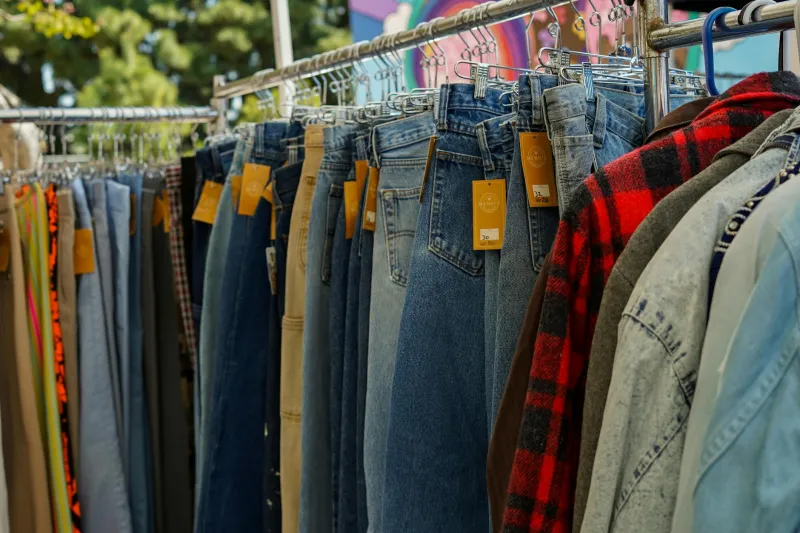
Walk into any American closet today and you'll find at least one pair. They're hanging in boardrooms and backyard barbecues, worn by CEOs and construction workers, teenagers and grandparents. Denim jeans are so universal that it's hard to imagine they were once considered dangerous enough to ban from schools.
But the story of how America's most democratic garment came to exist starts with tent canvas and a very specific problem in 1850s California.
The Tailor Who Listened to Complaints
Levi Strauss wasn't trying to revolutionize fashion when he arrived in San Francisco during the Gold Rush. The Bavarian immigrant was selling dry goods—canvas, rope, and other supplies to miners who were tearing through the Sierra Nevada mountains looking for fortune.
The breakthrough came from customer feedback that would make any modern product manager proud. Miners kept complaining that their pants couldn't handle the rough work. Pockets ripped out from the weight of gold nuggets and tools. Seams split when they crouched or climbed.
Strauss had canvas lying around—originally intended for tents and wagon covers. In 1873, working with Nevada tailor Jacob Davis, he reinforced the stress points with metal rivets. Those copper rivets, placed at pocket corners and other weak spots, were the innovation that separated these work pants from everything else on the market.
The first Levi's weren't even blue. They were brown canvas, tough as leather but more flexible. The indigo-dyed cotton denim came later, borrowed from French fabric traditions. "Denim" itself comes from "de Nîmes"—fabric from the French city of Nîmes.
From Workwear to Wartime Worry
For decades, jeans stayed exactly where Strauss intended: on ranchers, railroad workers, and miners. They were functional clothing for people who needed functional clothing. Middle-class Americans wouldn't be caught dead in them.
World War II changed everything. American soldiers wore jeans during their off-duty hours, and Europeans got their first real look at this uniquely American garment. When the war ended, jeans had become an export—a symbol of American informality and freedom that fascinated the rest of the world.
But back home, jeans were about to become controversial in ways Levi Strauss never could have predicted.
The Rebel Uniform That Terrified School Boards
The 1950s turned jeans into a symbol of teenage rebellion, and American adults panicked accordingly. When Marlon Brando wore jeans in "The Wild One" and James Dean made them iconic in "Rebel Without a Cause," school districts across the country banned them outright.
The reasoning was dead serious: jeans represented defiance of authority, association with juvenile delinquents, and a rejection of proper American values. Some movie theaters refused admission to anyone wearing denim. The garment that had clothed America's hardest workers was suddenly too dangerous for high school hallways.
Parents worried that jeans would corrupt their children. Newspapers ran editorials about the "denim menace." School administrators treated blue jeans like a gateway drug to motorcycle gangs and rock 'n' roll.
The irony was perfect: a garment created for honest, hardworking miners had become the uniform of supposed troublemakers.
The Counterculture Embrace
The 1960s counterculture movement adopted jeans as the perfect anti-establishment uniform. If adults hated them, they must represent authentic American values—the values of workers, not corporate executives in gray flannel suits.
Hippies, civil rights activists, and anti-war protesters all wore jeans as a statement. They represented democracy, equality, and authenticity in ways that formal clothing couldn't. When you wore jeans, you were rejecting the buttoned-up conformity of 1950s America.
Fashion designers began to notice. What had started as pure function was becoming a statement about American identity.
The Corporate Conquest
By the 1980s, the rebellion was over—jeans had won. Designer labels started putting their names on denim. Calvin Klein, Gloria Vanderbilt, and other high-end brands transformed work pants into luxury items. Jeans that once cost a few dollars were selling for hundreds.
The ultimate victory came when jeans moved into offices. "Casual Friday" became a nationwide phenomenon, and suddenly the same garment banned from schools was acceptable in corporate boardrooms.
Today's Denim Democracy
Modern Americans own an average of seven pairs of jeans. The global denim market generates nearly $100 billion annually. From $20 pairs at big-box stores to $300 artisanal selvedge denim, jeans have become the most democratic garment in human history.
The canvas work pants that Levi Strauss created for Gold Rush miners now exist in every price point, style, and cultural context imaginable. They're worn by farmers and fashion models, worn to church and to construction sites, worn by people who have never held a pickaxe but still want to connect with that original spirit of American pragmatism.
Levi Strauss solved a simple problem: miners needed pants that wouldn't fall apart. He had no idea he was creating a garment that would define American casual culture for the next 150 years. Sometimes the most revolutionary innovations start with someone just trying to make work pants that actually work.