The Soot-Scrubbing Putty That Accidentally Launched a Million Art Projects
When Coal Dust Ruled American Homes
Picture 1950s America: families gathering around coal furnaces for warmth, black soot coating wallpaper throughout the house, and homeowners desperately searching for ways to clean their walls without ruining the expensive vinyl wallpaper that had become fashionable. This was the world that spawned one of childhood's most iconic toys—though nobody realized it at the time.
In Cincinnati, Ohio, the Kutol Products company had found their niche manufacturing a putty-like substance designed specifically for this problem. The beige, dough-like compound could be rolled across wallpaper to lift away coal residue without damaging the delicate surface underneath. For a brief moment, it seemed like the perfect solution to a uniquely mid-century American problem.
The Product Nobody Wanted Anymore
But then everything changed. Natural gas and electric heating began replacing coal furnaces across the country. Suddenly, American homes weren't filling with soot anymore. Kutol's wallpaper cleaner—their primary product—was becoming obsolete almost overnight.
The company faced a crisis that would be familiar to any business owner: their core product was rapidly losing relevance. Hardware stores stopped ordering. Sales plummeted. The putty that had once seemed so essential was now just another industrial relic gathering dust in warehouses.
Joe McVicker, who ran Kutol, watched his family business teeter on the edge of bankruptcy. The company that his father-in-law had built was dying along with America's coal-burning era.
A Teacher's Creative Spark
The salvation came from an unexpected source: Kay Zufall, a nursery school teacher in New Jersey and Joe McVicker's sister-in-law. She had been reading an article about using the wallpaper cleaner as a craft material when a lightbulb went off.
Zufall realized that the putty's moldable texture made it perfect for children's art projects. It was safer than traditional modeling clay, didn't dry out quickly, and could be reused over and over. She began using it in her classroom, watching as kids created sculptures, shapes, and endless imaginative projects.
The results were immediate and obvious. Children loved the material. It was easier to work with than clay, came in a convenient size, and cleanup was simple. Parents appreciated that it wasn't messy or permanent. What had been designed to clean walls was naturally perfect for creative play.
The Overnight Pivot
When Zufall shared her discovery with her brother-in-law, McVicker saw an opportunity that would save his company. But the transition wasn't just about finding a new market—it required completely reimagining their product.
First came the rebranding. The industrial-sounding wallpaper cleaner needed a name that would appeal to children and parents. They settled on "Play-Doh," instantly communicating both fun and the product's clay-like properties.
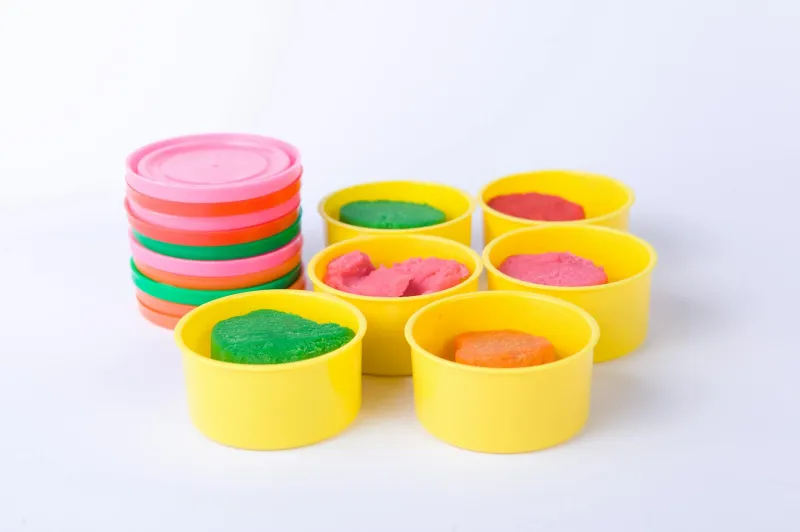
Next, they reformulated the compound. The original cleaner was beige and somewhat rough in texture. For the toy market, they created brighter colors and made the material softer and more pliable. The iconic red, yellow, and blue containers became the standard, each holding enough material for extended play sessions.
From Hardware Stores to Toy Aisles
The marketing shift was equally dramatic. Instead of targeting hardware stores and cleaning supply distributors, Kutol began approaching toy stores and department stores. They created packaging that appealed to children, with bright colors and playful graphics replacing the utilitarian design of the cleaning product.
The transformation worked beyond anyone's expectations. Play-Doh debuted as a toy in 1956 and became an immediate hit. Within a few years, it was one of the best-selling children's toys in America, generating millions in revenue for a company that had been on the verge of closing.
The Accidental Empire
What makes Play-Doh's origin story particularly fascinating is how completely accidental the discovery was. Unlike many toy inventions, this wasn't the result of someone trying to create something fun for children. It was pure serendipity—a cleaning product that happened to have the perfect properties for creative play.
The success was so complete that Kutol eventually sold the Play-Doh brand to General Mills, then later to Hasbro, where it remains one of their flagship products. Today, more than three billion cans have been sold worldwide, making it one of the most successful toy pivots in business history.
Why It Still Matters
Play-Doh's origin story offers a perfect example of how innovation often comes from unexpected places. Sometimes the next big thing isn't a revolutionary new invention—it's recognizing that something already exists, just serving the wrong purpose.
The putty that once cleaned coal soot from American walls now shapes the creative development of children around the world. It's a reminder that the most successful products often begin life as something completely different, waiting for someone to see their hidden potential.
Every time a child opens that familiar yellow container, they're participating in one of business history's most successful accidental discoveries—proof that sometimes the best innovations happen when we're not even trying to innovate at all.