The Two-Letter Joke That Became the Most Spoken Word on Earth
The Two-Letter Joke That Became the Most Spoken Word on Earth
OK. You just read that and your brain processed it instantly, effortlessly, without a flicker of hesitation. It's one of the first things we learn to say and one of the last things we'd ever think to question. It's on keyboards, in text messages, in boardrooms, in kindergarten classrooms, and in casual conversations in virtually every country on the planet.
But here's the thing nobody tells you: "OK" is shockingly young. And it was born from a joke.
Boston, 1839: When Newspapers Were the Internet
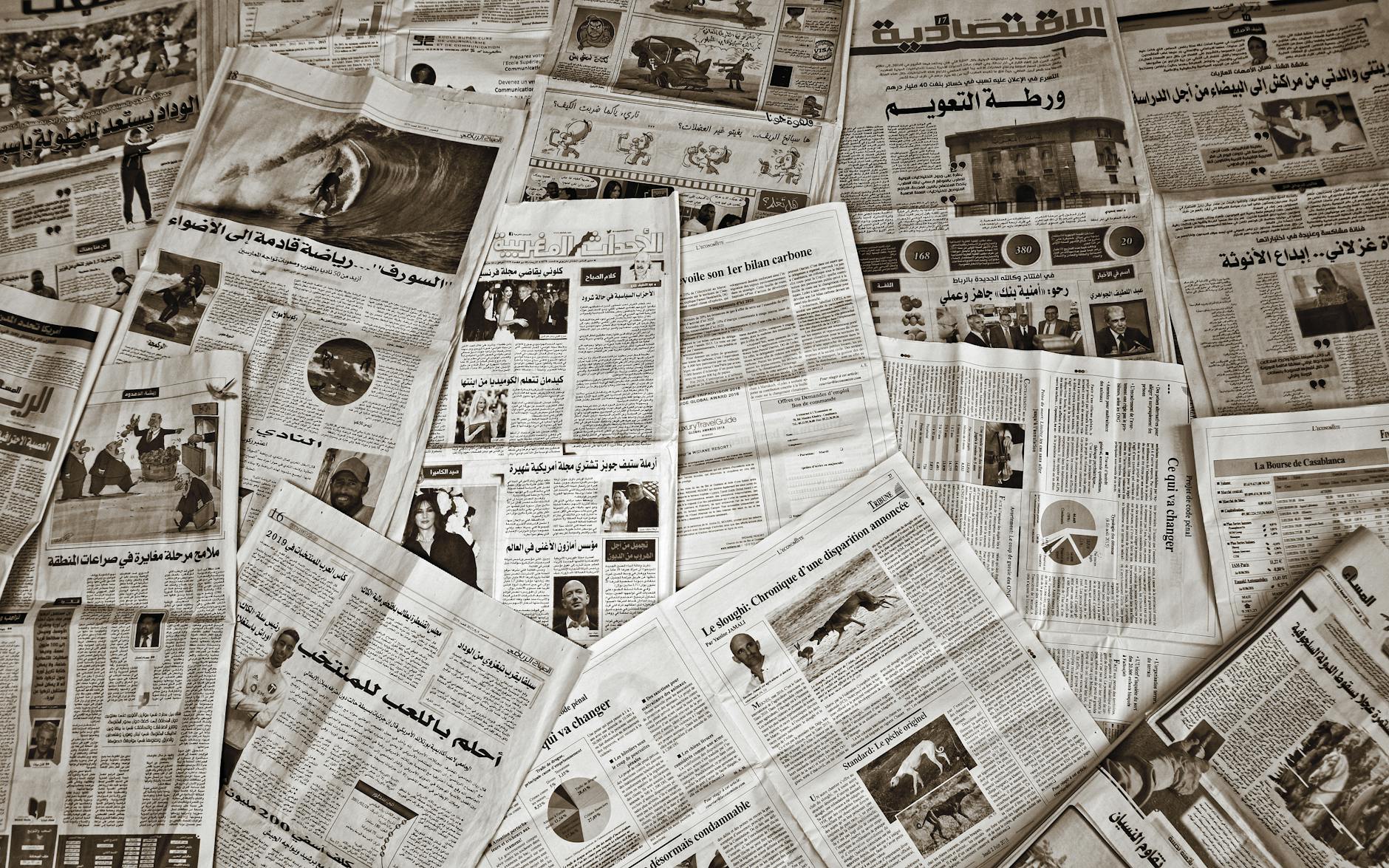
To understand where OK came from, you have to understand what American newspapers were doing in the late 1830s. Editors competed fiercely for readers, and one of the ways they grabbed attention was through wit — including a popular trend of deliberately misspelling words as a kind of comedic shorthand.
Abbreviations were fashionable in a way that might remind you of early internet slang. "No go" became "K.G." (for "know go"). "All right" was sometimes rendered as "O.W." (for "oll wright"). It was playful, a little inside-jokey, and the kind of thing that made readers feel clever for being in on it.
On March 23, 1839, the Boston Morning Post published a piece that included the abbreviation "O.K." — standing for "oll korrect," a jokey misspelling of "all correct." It was a throwaway gag. A footnote to a larger piece. The kind of thing that might get a chuckle and then disappear forever into the archives.
Except it didn't disappear.
Enter "Old Kinderhook" and the Election That Made OK Famous
The abbreviation might have faded quietly into history if it hadn't collided, just one year later, with American presidential politics.
In 1840, President Martin Van Buren was running for re-election. Van Buren was from Kinderhook, New York — a fact his supporters leaned into hard by forming a campaign organization called the OK Club, where "OK" stood for "Old Kinderhook," a friendly nickname for their candidate.
Suddenly, "OK" was everywhere. It was on campaign buttons, in newspaper headlines, shouted at political rallies up and down the East Coast. The overlap with the Boston newspaper joke wasn't lost on people — in fact, it amplified the word's reach. Supporters claimed that Van Buren being "OK" meant he was "all correct" for the job. Opponents tried to spin it negatively. Either way, everyone was talking about it.
Van Buren lost the election. But OK won something much bigger.
How a Political Slogan Became a Universal Word
After 1840, OK took on a life entirely its own. It detached from both its jokey newspaper origin and its political campaign context and simply became... useful. Incredibly, stubbornly, universally useful.
Part of what made OK spread so fast across 19th-century America was the telegraph. As the country wired itself together in the 1840s and 50s, telegraph operators needed fast, reliable shorthand to confirm messages had been received. "OK" — short, unambiguous, easy to tap out in Morse code — became standard operating procedure on telegraph lines from New York to San Francisco. It was essentially the original "message delivered" notification.
From there, it embedded itself into railroad communications, business correspondence, and everyday speech. By the time the 20th century arrived, OK wasn't slang anymore. It was just language.
OK Goes Global
What's remarkable about OK isn't just how fast it spread across America — it's how thoroughly it conquered the rest of the world. Language historians consider it one of the most widely understood words in any language, spoken and recognized by billions of people across cultures that have almost nothing else in common linguistically.
Part of that reach came through American cultural exports: Hollywood films, pop music, and eventually the internet all carried OK into every corner of the globe. But linguists also point out that OK is just genuinely easy — it's short, phonetically simple, and carries a meaning that nearly every human interaction occasionally needs. Confirmation. Agreement. Acknowledgment. "I heard you. We're good. Let's move on."
No other word does that job quite so efficiently.
The Accidental Word That Runs the World
The Columbia University professor Allen Walker Read spent years in the mid-20th century digging through historical records to track down OK's true origin, finally publishing his findings in the 1960s. Before his research, theories about the word's roots ranged from a Choctaw expression to a Scottish phrase to a Civil War military shorthand. Read's work pointed the evidence squarely back to that 1839 Boston newspaper, and most language historians have accepted his conclusion ever since.
So the next time you fire off an "OK" in a text message, or tell your kid "okay, fine" after the third request for dessert, or click "OK" on a computer dialog box, you're unknowingly carrying forward a 185-year-old newspaper prank that got accidentally turbocharged by a presidential election.
Not bad for a joke that wasn't even that funny.