The Cave That Cheese Built
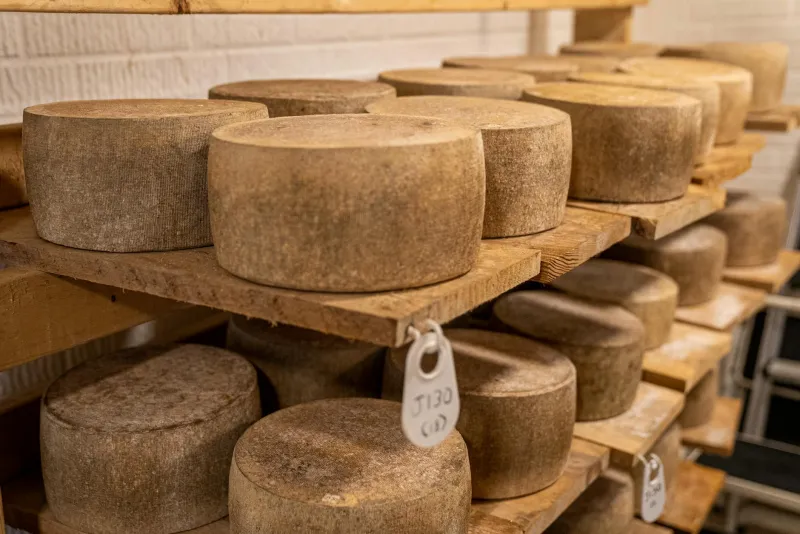
Deep beneath the rolling hills of Missouri, in a network of limestone caves that once housed nothing but darkness, sat America's most embarrassing agricultural secret: 560 million pounds of surplus cheese. By 1981, the federal government had somehow become the nation's largest cheese hoarder, and nobody knew what to do about it.
The problem started innocently enough. During the 1970s, federal dairy price supports were designed to help struggling farmers by guaranteeing minimum prices for milk. When market prices dropped below those guarantees, the government would buy the surplus. What policymakers didn't anticipate was just how much surplus there would be—or how quickly cheese spoils when you're storing it by the millions of pounds.
From Policy Problem to National Crisis
By the early 1980s, the cheese stockpile had grown so massive that storage costs alone were eating up $1 million per day. The underground caves in Missouri, Kansas, and other states became impromptu cheese warehouses, their cool temperatures perfect for preservation but terrible for public relations. News outlets began running stories about "government cheese caves," and the Reagan administration found itself defending a dairy policy that seemed increasingly absurd.
The cheese itself wasn't gourmet—it was processed American cheese, the kind that melts easily but lacks the complexity of aged varieties. Still, it was perfectly edible, and with recession gripping the country, letting it rot seemed unconscionable. The government needed an exit strategy, and fast.
The Great Cheese Giveaway
In December 1981, President Reagan announced a plan to distribute 30 million pounds of surplus cheese to food banks, soup kitchens, and low-income families. The program expanded rapidly, eventually including butter, honey, and other surplus commodities. Suddenly, processed cheese became a staple in American food assistance programs.
But the real cultural shift happened in schools. The USDA began incorporating surplus cheese into school lunch programs on an unprecedented scale. Cafeterias across America started serving cheese-heavy meals: pizza became a daily option, grilled cheese sandwiches appeared more frequently, and cheese sauce found its way onto vegetables that had never seen dairy before.
Training a Generation's Taste Buds
What happened next was entirely unintentional. An entire generation of American children—kids who came of age in the 1980s and 1990s—learned to expect cheese on everything. The bland, melty consistency of government surplus cheese became the baseline for what American processed cheese should taste like. Food manufacturers, recognizing this shift in consumer expectations, began formulating products to match.
The timing couldn't have been more perfect for the processed food industry. Companies like Kraft, which had been pushing processed cheese products since the 1950s, suddenly found themselves with a generation of consumers who had been essentially trained to crave their products. The government cheese program had done something no advertising campaign could: it had made processed cheese feel normal, even comforting.
The Snack Food Revolution
As these government cheese kids grew up and gained purchasing power, food companies noticed something remarkable. Products that featured the same melty, mild cheese profile as the government surplus were flying off shelves. Cheese-flavored snacks exploded in popularity. Nacho cheese Doritos, which had launched in 1972 with modest success, suddenly became a cultural phenomenon.
The influence extended beyond snacks. Fast food chains began incorporating more cheese into their menus, confident that customers would respond positively. The rise of cheese-heavy fast casual chains like Chipotle and Qdoba can be traced, in part, to this cultural shift toward expecting cheese as a default rather than an upgrade.
The Processed Cheese Empire
By the 1990s, American cheese consumption had increased dramatically, but it wasn't artisanal varieties driving the growth—it was processed cheese. The government's accidental conditioning program had created a market that prioritized meltability and mild flavor over complexity or traditional cheesemaking techniques.
Food scientists began engineering cheese products specifically for this American palate. Velveeta, Cheez Whiz, and similar products weren't trying to replicate traditional cheese anymore—they were perfecting the government cheese experience that millions of Americans now associated with comfort and familiarity.
The Legacy Lives On
Today, Americans consume more processed cheese per capita than any other country in the world. Walk down any grocery store aisle, and you'll find dozens of products that trace their DNA back to that 1980s surplus cheese crisis. From string cheese to cheese crackers to the ubiquitous "cheese dust" that coats everything from popcorn to pretzels, the influence of Uncle Sam's cheese mountain is everywhere.
The government cheese caves still exist, though they're mostly empty now. But their legacy lives on in the American snack food aisle, a monument to how a bureaucratic headache accidentally rewired a nation's taste buds. What started as a policy problem became a cultural transformation—one that food companies are still cashing in on, forty years later.