The Wine Defect That Became America's Ultimate Party Symbol
The Monk Who Hated Bubbles
Picture this: It's 1668, and Dom Pierre Pérignon is having the worst year of his winemaking career. The newly appointed cellar master at the Abbey of Hautvillers in France's Champagne region keeps finding his wines ruined by unwanted bubbles. What he doesn't know is that he's accidentally stumbled upon what will become America's most celebrated drink.
Pérignon wasn't trying to invent champagne—he was trying to prevent it. The bubbles appearing in his wine barrels were considered a serious defect, a sign that something had gone terribly wrong during fermentation. For a perfectionist monk responsible for the abbey's reputation, these fizzy failures were a source of constant frustration.
The Accidental Chemistry Lesson
What Pérignon couldn't understand was the science behind his "problem." The cool temperatures in his underground cellars were causing a secondary fermentation that trapped carbon dioxide in the wine. Instead of the smooth, still wines he was aiming for, he kept producing bottles that would explode under pressure or, worse yet, fizz uncontrollably when opened.
The monk spent years experimenting with different techniques to eliminate the bubbles. He tried varying fermentation times, adjusting grape blends, and even changing storage methods. Nothing worked. The stubborn fizz kept appearing, batch after batch.
When Failure Became Fashion
By the 1690s, something unexpected happened. Word spread about the abbey's "sparkling" wines, and curious French nobility began requesting them specifically. What Pérignon had viewed as his greatest failure was becoming his most sought-after product.
The transformation wasn't immediate. It took decades for the monk to perfect techniques for controlling the bubbles rather than eliminating them. He developed stronger bottles to withstand the pressure, experimented with cork stoppers, and refined his blending methods. Slowly, his accidental discovery evolved from a winemaking mistake into a deliberate art form.
Crossing the Atlantic
Champagne didn't immediately conquer America. When European settlers first arrived, they brought preferences for rum, whiskey, and beer. Sparkling wine was an expensive luxury that few colonists could afford or access.
The real breakthrough came in the 1800s, when American entrepreneurs began importing French champagne for special occasions. The drink's association with European sophistication made it a status symbol among wealthy Americans. By the Civil War era, champagne had become the preferred beverage for toasting important moments.
The New Year's Connection
The link between champagne and New Year's Eve celebrations is more recent than most Americans realize. While the French had long associated sparkling wine with festivities, the American tradition really took hold in the early 1900s.
Newspapers began promoting champagne as the "proper" way to welcome the new year, and hotels in major cities started hosting champagne-fueled celebrations. The 1920s Prohibition era, ironically, cemented champagne's party reputation—bootleggers found sparkling wine easier to smuggle and more profitable to sell than regular wine.
From Times Square to Your Living Room
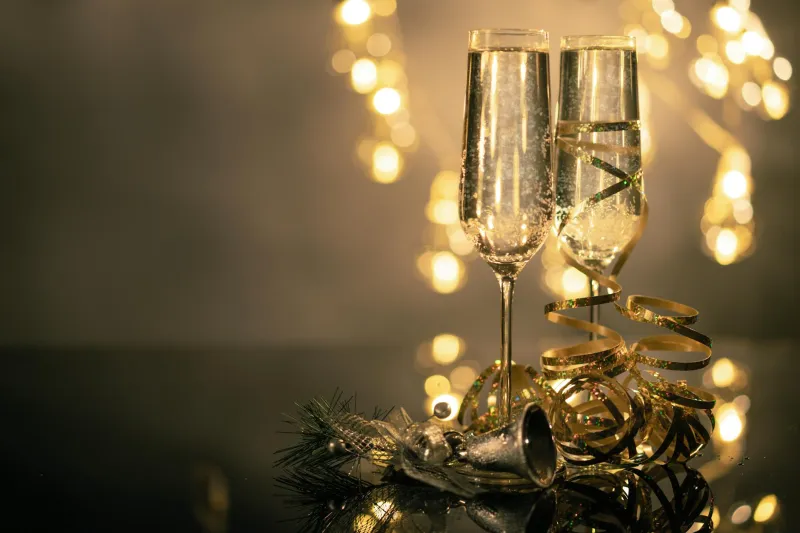
The modern American champagne tradition exploded after World War II. Television coverage of New Year's Eve celebrations in Times Square showed celebrities and party-goers raising champagne flutes, creating a visual association that stuck. By the 1960s, popping champagne had become as essential to New Year's Eve as watching the ball drop.
Sports celebrations amplified the tradition further. When NASCAR drivers began spraying champagne in victory celebrations during the 1960s, and NFL teams followed suit after championship wins, the drink became synonymous with American triumph and celebration.
The Billion-Dollar Bubble
Today, Americans consume more champagne during the week between Christmas and New Year's than any other time of year. The sparkling wine industry generates over $5 billion annually in the U.S., with New Year's Eve accounting for roughly 25% of yearly sales.
What started as Dom Pérignon's biggest headache has become one of America's most enduring party traditions. Every December 31st, millions of Americans unknowingly toast to a 17th-century monk's happy accident.
The Irony of Success
The most remarkable part of this story isn't just that champagne became popular—it's that Americans embraced a drink born from failure. Dom Pérignon spent years trying to create perfect still wine, only to discover that his "imperfect" bubbles were what people really wanted.
Next time you raise a champagne flute to celebrate, remember you're not just toasting the new year. You're celebrating one of history's greatest accidental discoveries, courtesy of a frustrated French monk who never could have imagined his wine-making "mistakes" would become America's favorite way to party.