The Surplus Cheese Mountain That Accidentally Launched America's Health Food Revolution
The Underground Cheese Empire Nobody Talks About
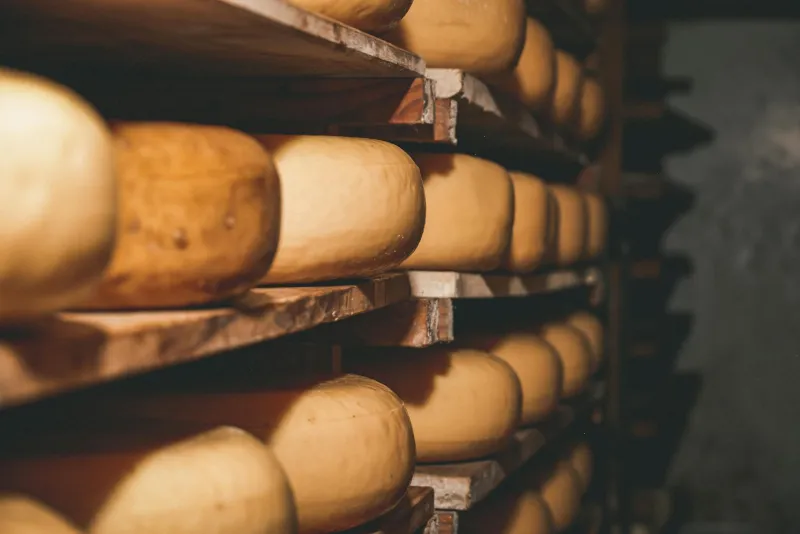
Deep beneath Missouri, in a network of limestone caves, the U.S. government once stored over 1.4 billion pounds of surplus cheese. It sounds like the setup to a weird joke, but this massive dairy stockpile in the 1970s and 80s became the unlikely catalyst for America's organic food revolution.
The cheese caves weren't a secret, exactly, but they weren't advertised either. Most Americans had no idea their tax dollars were funding an underground empire of processed American cheese, stored at a perfect 58 degrees Fahrenheit in facilities that looked more like something from a science fiction movie than a food storage system.
When Government Cheese Became a Punchline
The cheese stockpile was the result of well-intentioned agricultural policies designed to support dairy farmers by purchasing surplus milk products. But by the early 1980s, the program had spiraled into something surreal. The government was buying so much cheese that it didn't know what to do with it all.
Enter "government cheese"—the processed, individually wrapped slices that were distributed through food assistance programs. The cheese became a cultural touchstone, referenced in comedy routines and political speeches as a symbol of bureaucratic excess and questionable food quality.
But here's what nobody expected: instead of just laughing at government cheese, many Americans started asking uncomfortable questions about all their food. If the government was stockpiling processed cheese in caves, what else didn't they know about what they were eating?
The Rebellion That Started in Backyard Gardens
The cheese caves coincided with a growing distrust of large-scale food production that had been building since the 1960s. Industrial agriculture, with its emphasis on efficiency and shelf life, had transformed American eating habits. But the visible absurdity of the cheese stockpile made abstract concerns about "processed food" suddenly concrete.
Families started asking: Why does our cheese need to be stored in caves? Why does it last so long without spoiling? What exactly is in this stuff?
These questions led to action. Across the country, small groups of consumers began seeking alternatives to industrial food production. They started shopping at tiny health food stores, joining food co-ops, and—most importantly—connecting directly with local farmers who were growing food the "old way."
The Farmers Who Accidentally Became Revolutionaries
Meanwhile, a scattered network of farmers was dealing with their own frustrations with industrial agriculture. Many had grown tired of the chemical inputs, standardized varieties, and corporate middlemen that dominated modern farming. Some were motivated by environmental concerns, others by economics, and still others by a simple desire to grow food the way their grandparents had.
These farmers weren't initially calling themselves "organic"—that term wouldn't be officially defined until decades later. They were just growing food without synthetic pesticides and fertilizers, often selling directly to consumers at small farmers' markets or roadside stands.
The cheese cave controversy created an unexpected meeting point between suspicious consumers and alternative farmers. People who had lost trust in industrial food systems found farmers who had never fully bought into them in the first place.
From Suspicion to Movement
What started as scattered skepticism about government cheese evolved into a broader questioning of the entire industrial food system. Consumers began reading ingredient labels more carefully, asking about farming practices, and seeking out alternatives to supermarket chains.
The early organic movement wasn't driven by marketing or corporate strategy—it was fueled by genuine distrust of faceless food production. People wanted to know where their food came from, how it was grown, and who was growing it.
Small health food stores, which had previously catered mainly to hippies and health enthusiasts, suddenly found themselves serving mainstream customers who were simply tired of wondering what was really in their food. These stores became information hubs where consumers learned about alternatives to industrial agriculture.
The Accidental Billion-Dollar Industry
The organic movement grew slowly at first, driven by word-of-mouth recommendations and small-scale farmers' markets. But the underlying consumer sentiment—distrust of large-scale, processed food production—kept expanding.
By the 1990s, what had started as a fringe reaction to government cheese stockpiles had become a significant market force. Major retailers began adding organic sections, and large food corporations started acquiring organic brands.
Today, the organic food industry generates over $60 billion annually in the United States. What began as a grassroots rebellion against industrial food has become a mainstream market category, complete with its own industrial-scale production and corporate consolidation.
The Irony of Success
The transformation is almost comically complete. Many of today's organic products are produced by the same large corporations that once symbolized everything the original movement opposed. Organic foods are processed, packaged, and distributed through the same industrial systems that suspicious consumers were trying to avoid in the 1980s.
But the core insight that launched the movement—that consumers have a right to know and choose what they eat—has permanently changed American food culture. The government cheese caves forced people to confront the reality of industrial food production, and that confrontation created a market for alternatives that continues to grow.
The Underground Legacy
The Missouri cheese caves still exist, though they now store a variety of products for private companies rather than government surplus. But their legacy lives on every time an American consumer chooses organic milk over conventional, shops at a farmers' market instead of a supermarket, or simply reads an ingredient label before making a purchase.
What started as a bureaucratic embarrassment—billions of pounds of processed cheese stored in underground caves—accidentally created one of the most significant shifts in American food culture since the rise of supermarkets. Sometimes the most powerful revolutions begin not with manifestos or marketing campaigns, but with simple questions about what's really in our food and why it needs to be stored in a cave to stay "fresh."
The next time you see organic produce in a grocery store, remember: you're looking at the descendants of a consumer rebellion that started with people asking uncomfortable questions about government cheese. Not all revolutions announce themselves with fanfare—some begin quietly, in the produce aisle, with customers who simply decided they deserved better answers about what they were eating.