The Circus Con That Convinced You $3.99 Is Nothing Like $4.00
You've done it thousands of times without thinking about it. You look at a price tag reading $19.99 and your brain registers something comfortably under twenty dollars. You see $4.99 and think of it as four dollars and change. The gap between $9.99 and $10.00 feels enormous, even though it's a single penny.
This is not a coincidence. It's not an accident of commerce. It's a deliberate psychological manipulation that has been running on the American consumer for well over a century — and it didn't originate in a boardroom or a focus group. It was invented to stop carnival workers from pocketing cash.
The Till-Opening Problem
To understand where charm pricing — the industry term for prices ending in .99 or .95 — actually came from, you have to go back to a time before electronic registers, security cameras, or any reliable way to track whether a cashier was skimming money from transactions.
In the mid-to-late 1800s, retail theft by employees was a genuine epidemic. Workers at market stalls, general stores, and traveling fairs had a simple and effective method: when a customer handed over exact change or a rounded amount for a purchase, the employee could pocket the cash without ever opening the register. No change needed, no record required, no way for the owner to know the transaction had happened at all.
The solution some operators landed on was elegant in its simplicity. Price everything at an amount that couldn't be paid with exact change. If a newspaper cost 10 cents and you priced it at 9 cents instead, the customer would hand over a dime and the cashier would have to open the till to return a penny. That forced interaction created a paper trail — or at least a witness — making it much harder to make a sale disappear.
Carnival operators and newspaper vendors are most frequently cited as the early adopters of this trick, though pinning it to a single inventor is impossible. It was a practical solution that spread through word of mouth among people running cash-heavy businesses with limited oversight.
From the Fairground to the Department Store
The strategy migrated from traveling fairs and street vendors into the formal retail environment during the late 19th century, as American department stores began scaling up rapidly.
One early and influential adopter was Melville Stone, the founder of the Chicago Daily News. In 1875, Stone priced his paper at one cent — specifically to force customers to use pennies, which were then relatively scarce, driving them to stores that stocked pennies as change. The tactic boosted circulation and embedded odd pricing in newspaper culture for decades. Other publishers followed.
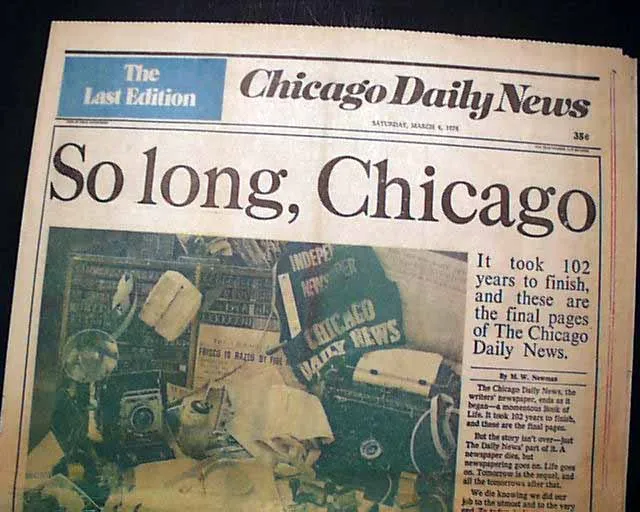 Photo: Chicago Daily News, via secure-images.rarenewspapers.com
 Photo: Melville Stone, via www.highlandlandscapesupply.com
Department store operators picked up the approach for similar anti-theft reasons, but quickly noticed a secondary effect: customers seemed to respond more positively to odd prices than to round numbers. A dress priced at $4.99 moved faster than the same dress at $5.00, even when the owner raised the price slightly to get there. The penny difference felt psychologically significant to shoppers in a way that didn't map to its actual monetary value.
By the early 20th century, major retailers were using charm pricing not just to prevent theft but as a deliberate sales strategy. The fraud-prevention tactic had accidentally become a marketing tool.
What's Actually Happening in Your Brain
For most of the 20th century, retailers operated on intuition when it came to odd pricing. They knew it worked; they weren't entirely sure why. The psychological research that explained the mechanism came later.
The most widely accepted explanation involves what researchers call the "left-digit effect." When humans read a number, we process the leftmost digit first and give it disproportionate weight. When you see $3.99, your brain anchors on the 3 before it processes the rest. The number registers in the "three-dollar" category in your mind, not the "four-dollar" category — even though the difference is a single cent.
Studies have repeatedly confirmed that this effect is real and significant. A 2005 study published in the journal Quantitative Marketing and Economics found that demand for items actually increased when prices were raised from a round number to a .99 price point. Charging more produced more sales. That's not how pricing is supposed to work.
A separate line of research found that .99 pricing activates associations with discounts and value, even when no discount is being offered. Consumers have been conditioned by a century of retail experience to read odd-ending prices as bargains, regardless of context. The signal has become so deeply embedded that it operates almost automatically.
The Circus Con Goes Digital
If you needed evidence of how thoroughly this strategy has colonized American commerce, look at your phone.
App stores price apps at $0.99, $1.99, $4.99. Streaming services run $7.99 or $13.99 a month. Software subscriptions end in .95 or .99 with almost religious consistency. The digital economy, which has no cashiers to monitor and no physical till to open, has imported a theft-prevention scheme designed for 19th-century fairgrounds and applied it to virtual products that have no manufacturing cost whatsoever.
The original reason for the strategy — forcing a cash transaction that created a paper trail — is completely irrelevant in a world of digital payments and automated accounting. But the psychological effect it accidentally produced remains as powerful as ever.
Retailers continue to use charm pricing because it works, full stop. The carnival barker's anti-theft trick turned out to be one of the most durable consumer psychology hacks ever discovered — and it wasn't even designed to be a consumer psychology hack.
The Price of a Penny
The next time you're standing in a store, phone in hand, debating whether $27.99 is a reasonable price for something you may or may not need, take a moment to appreciate the full arc of what's happening.
Somewhere in the 1870s, a fairground operator got tired of his workers stealing from the till. He changed his prices by a cent or two to force them to make change. That penny-level adjustment turned out to rewire how an entire nation perceives value — and it's been running quietly in the background of every purchase you've ever made.
The con didn't come from Madison Avenue. It came from a circus. And it's still working perfectly.