Millions of Americans Had No Birthday Until the Government Panicked
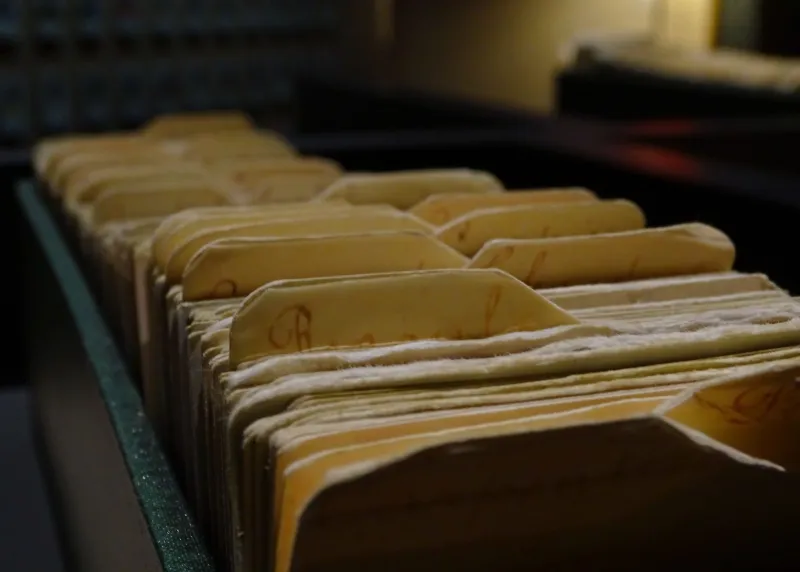
Your birth certificate is probably filed somewhere in your home — tucked in a drawer, folded inside a manila envelope, or stored in a fireproof box alongside your passport and Social Security card. You've needed it to get a driver's license, apply for a passport, start a job, maybe enroll in school. It feels ancient and official, like a document that has always existed in its current form.
It hasn't. Not even close.
For most of American history, the government had no standardized system for recording when its citizens were born. Millions of Americans who were alive in the early 20th century had no official documentation of their birth at all. And the push to fix that gap wasn't driven by good governance or forward planning. It was driven by a cascade of emergencies — fires, a world war, and a retirement program that suddenly needed to know exactly how old everyone was.
When Churches Kept the Records
For the first century or so of American life, birth records were almost entirely a private affair. If your birth was recorded anywhere, it was likely in a family Bible, a church register, or a doctor's personal ledger. These records varied wildly in completeness and accuracy. Rural families, immigrants, formerly enslaved people, and anyone born far from a church or physician often had no written record of their birth at all.
Some states made early attempts at civil registration. Massachusetts passed a law requiring birth registration in 1842. Other states followed at various points throughout the 19th century. But these laws were inconsistently enforced, and compliance was patchy at best. A law requiring parents to register a birth meant nothing if the local registrar's office was understaffed, hard to reach, or simply not taken seriously.
Then there were the fires.
The Courthouse Problem
Wooden courthouse buildings burned with alarming regularity throughout the 19th and early 20th centuries — from accidents, lightning strikes, and occasionally from deliberate arson during periods of civil unrest. When a courthouse burned, it often took every local record with it: deeds, wills, court judgments, and whatever birth and death records the county had managed to collect.
These weren't isolated incidents. Historians have documented hundreds of courthouse fires across American history, particularly in the South and Midwest. Entire counties lost their civil records in a single night. In some cases, communities rebuilt from scratch with no documentation of who owned what land, who had married whom, or when anyone had been born.
The fragility of local record-keeping was a known problem, but it didn't create a national crisis until the early 20th century forced the issue.
The Draft Board Didn't Know How Old Anyone Was
When the United States entered World War I in 1917, the government needed to register men for the draft within a specific age range. This should have been straightforward. It wasn't.
Draft boards across the country were flooded with men who had no documentary proof of their age. Some had family Bibles. Some had baptismal records from churches that may or may not have still existed. Some had nothing at all except their own word. Draft administrators found themselves making judgment calls about men's ages based on physical appearance and personal testimony — not exactly a reliable system for a wartime mobilization.
The draft crisis exposed just how hollow American civil record-keeping actually was. But even that embarrassment didn't produce immediate, sweeping reform. What finally broke the logjam was money.
Social Security Changed Everything
The Social Security Act of 1935 created a new and urgent problem: the federal government now needed to verify the ages of millions of Americans to determine retirement eligibility. To collect Social Security benefits at 65, you had to prove you were 65. For a significant portion of the American population, that proof simply didn't exist.
The Social Security Administration (SSA) became, somewhat accidentally, one of the most powerful drivers of birth certificate standardization in American history. The agency had to develop procedures for handling benefit claims from people with no official birth record — accepting church records, census data, midwife affidavits, and sworn statements from family members as substitute evidence.
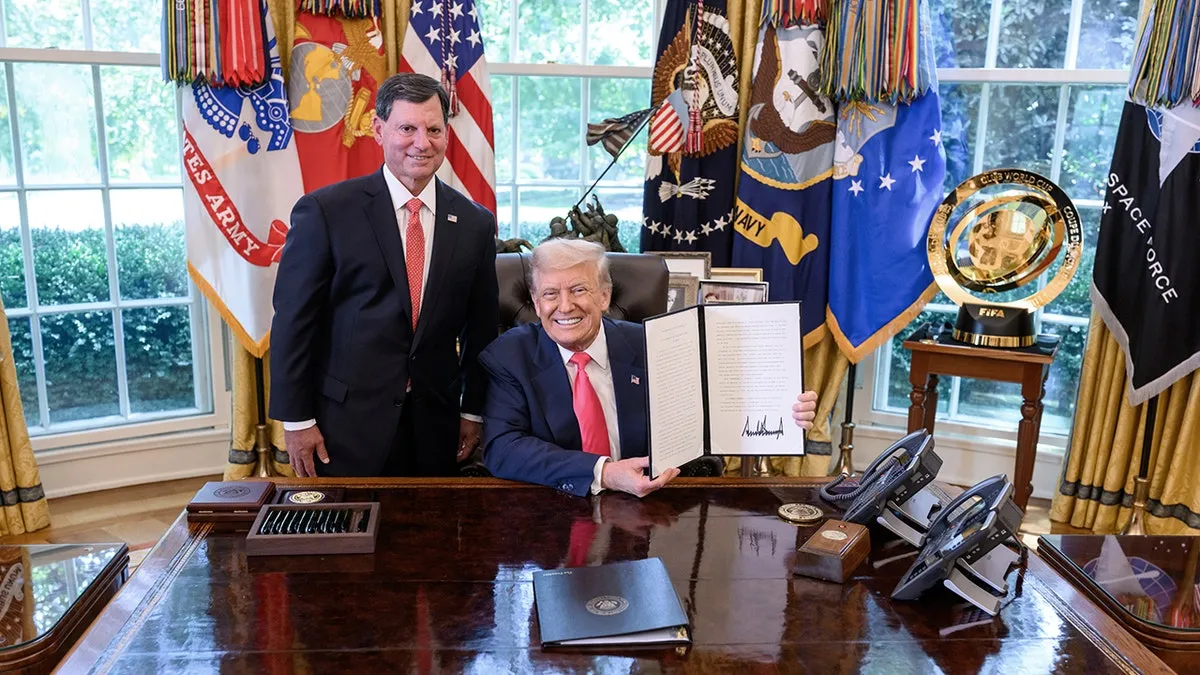 Photo: Social Security Administration, via a57.foxnews.com
The sheer administrative chaos this created put enormous pressure on states to get their registration systems in order. The SSA began working with the Census Bureau and state health departments to push for uniform registration standards. By 1940, the federal government was actively tracking which states had reliable vital statistics systems and which didn't.
 Photo: Census Bureau, via nypost.com
It took until 1933 for the Census Bureau to certify that 90% of births in the United States were being registered — a threshold they called "complete registration." Even that figure masked significant gaps. Registration rates for Black Americans, rural communities, and immigrant populations lagged well behind the national average for years afterward.
The Document That Defines You
The standardized birth certificate as Americans know it today — issued by a state vital records office, printed on security paper, bearing a raised seal — is largely a mid-20th century invention. The push to backfill records for people born before reliable registration existed continued for decades, through programs that allowed older Americans to establish legal proof of birth through delayed certificate applications.
Some of those applications were still being processed into the 1960s and 1970s, as the last generation born before universal registration aged into Social Security eligibility and discovered they needed paperwork that had never been created.
Today, a birth certificate is the foundational document of American legal identity. You need it to get every other piece of identification you carry. It feels permanent and inevitable, like something that must have existed forever.
But it's really the product of courthouse fires, draft board confusion, and a New Deal retirement program that needed to know, urgently and at national scale, exactly how old everybody was.
The document you were handed at birth has a much messier past than the clean seal on its surface suggests.