Nobody Agreed on What Red, White, and Blue Actually Looked Like — For 200 Years
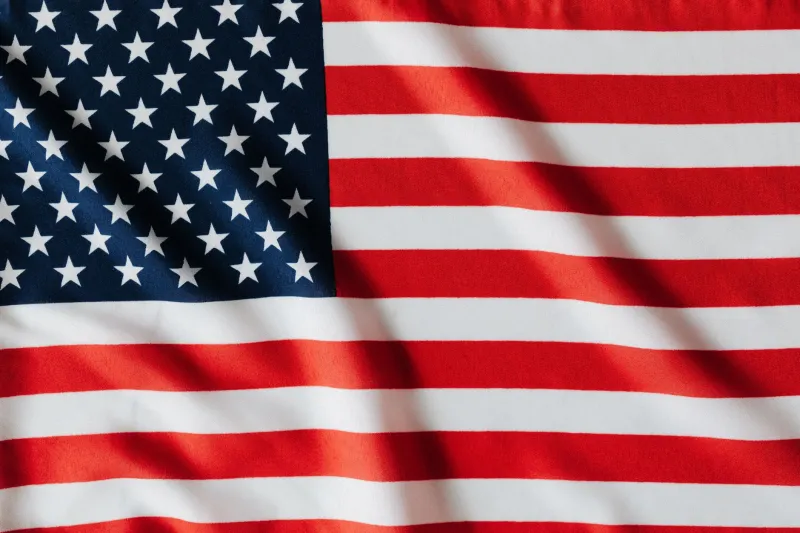
You've probably never stopped to question the red on the American flag. It's just red, right? Patriotic red. Obvious, unmistakable, American red.
Except for most of this country's history, nobody could actually agree on what that red looked like. Or the blue. Or even, to some extent, the white. For over 200 years, the colors of the most recognized flag on earth were essentially a matter of personal opinion — and the story of how that finally got resolved is one of the stranger bureaucratic accidents in American history.
The Founding Fathers Didn't Bother With the Details
When the Second Continental Congress passed the Flag Resolution in June 1777, the language was almost comically vague. The resolution stated that the flag should have thirteen stripes of red and white, and thirteen stars of white on a blue field. That was it. No specifications. No color codes. No reference standards. The men who wrote it apparently assumed that red, white, and blue were self-explanatory.
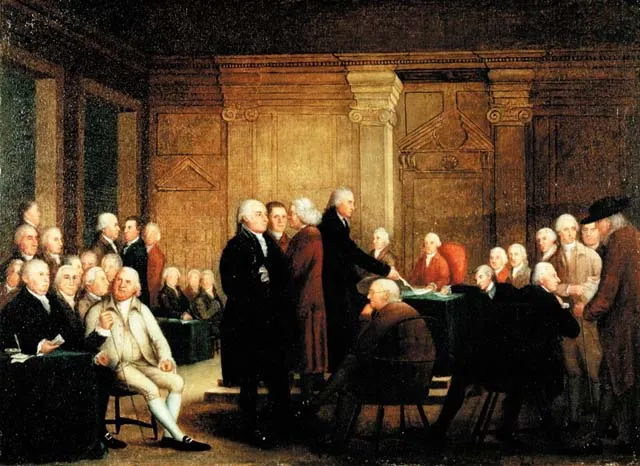 Photo: Second Continental Congress, via totallyhistory.com
They were not.
In the 18th and 19th centuries, fabric dyes were organic, inconsistent, and deeply regional. A flag maker in Boston working with locally sourced madder root would produce a very different red than a flag maker in Philadelphia using imported cochineal dye. The blue field — sometimes called "union blue" — ranged from a pale sky color to something almost approaching navy, depending on the indigo supply chain that particular workshop happened to use. Nobody was wrong, technically, because nobody had said what "right" looked like.
This wasn't considered a serious problem for a long time. Flags were handmade, regional objects. Consistency wasn't really the point.
The Industrial Era Made It Worse
When mechanized textile production took hold in the mid-1800s, you might expect things to get more uniform. Instead, the opposite happened. Now there were competing factories, competing dye suppliers, and competing trade groups — all with a financial interest in claiming that their version of the flag's colors was the authentic one.
By the late 19th century, the U.S. government was purchasing flags from multiple suppliers, and the results were visibly inconsistent. Military flags looked different from post office flags. Congressional flags looked different from the ones sold in general stores. Photographs from the era — even accounting for the limitations of early photography — show a striking range in the depth and tone of the colors used.
Some flag manufacturers lobbied for their specific dye formulas to be adopted as the national standard. Others argued that any attempt to codify the colors was itself un-American, a kind of bureaucratic overreach that missed the point of what the flag symbolized. That argument, improbable as it sounds, held real weight for decades.
The 20th Century Didn't Fix It Either
You'd think the federal government would have sorted this out somewhere between the invention of the telephone and the moon landing. It didn't.
Various executive orders touched on flag etiquette — how to display it, when to fly it at half-staff, how to fold it — but the actual color values remained undefined in any official document. The armed forces eventually developed their own internal standards, which meant the Army's version of flag red and the Navy's version weren't necessarily the same thing. Federal agencies printing patriotic materials worked from whatever reference their print shop happened to have on hand.
By the mid-20th century, the Pantone Matching System had given the commercial printing world a universal color language. But the U.S. government had not formally adopted Pantone values for the flag. So even as the rest of the design world standardized its color communication, the flag floated in a kind of official limbo.
The 1980s Bureaucratic Crisis That Finally Settled It
The resolution came not from Congress, not from a presidential commission, and not from any grand civic moment. It came from a printing standards dispute.
In the early 1980s, the federal government's General Services Administration — the agency responsible for managing government property and procurement — was working to standardize materials used across federal publications and signage. Color consistency was becoming an operational headache. Different agencies were producing patriotic materials in visibly different shades, and the inconsistency was becoming noticeable enough to generate complaints.
The GSA worked with the Institute of Heraldry — the Army office responsible for managing official U.S. symbols — to finally assign specific color values to the flag. The result, formalized through a series of procurement standards documents, locked in what are now the official colors: Old Glory Red, Old Glory Blue, and white.
Translated into modern design terms, the red sits at Pantone 193 C — a deep, slightly cool crimson. The blue is Pantone 281 C — a rich, dark navy that's considerably deeper than the mid-tone blue many people assume the flag uses. When these values were published, some manufacturers were surprised to discover that the flag they'd been producing for years was technically the wrong color.
Why the "Wrong" Colors Feel So Right
Here's the strange part. The colors that most Americans picture when they think of the flag — the bright, punchy red and the vibrant medium blue seen on everything from campaign posters to fireworks packaging — aren't actually the official values. They're lighter, more saturated, more visually energetic than the deep tones the government finally standardized.
That's because for two centuries, printers, manufacturers, and flag makers defaulted to whatever looked most vivid and celebratory on their particular materials. Those brighter, unofficial versions became culturally embedded. They're the colors on vintage Fourth of July posters. They're what Betsy Ross flags in museums look like after decades of fading from an already non-standard original.
The official standardization settled a bureaucratic problem. But the colors Americans actually feel are patriotic were shaped by 200 years of beautiful, chaotic inconsistency.
The Founding Fathers never defined what they meant by red, white, and blue. And in a way, the country filled that blank space with itself.