How a Linen Shortage in Postwar America Gave Working-Class Neighborhoods Their Living Room
Photo: Steve Shook from Moscow, Idaho, USA, CC BY 2.0, via Wikimedia Commons
There's a particular kind of American institution that nobody designed on purpose. The corner diner. The neighborhood barbershop. The front stoop. These places became community anchors not because a city planner drew them into a blueprint, but because people needed somewhere to be — and these spots happened to be there.
The coin-operated laundromat belongs in that same category. And its origin story is considerably stranger than most people realize.
The Problem Nobody Expected After the War
When World War II ended in 1945, America began one of the most dramatic social transformations in its history. Soldiers came home. Families formed fast. The economy lurched from wartime production back toward civilian life, and the service industry faced a staffing crisis that historians rarely discuss: there weren't enough workers to keep hotels running the way they used to.
For decades, mid-range and upscale hotels had operated large in-house laundry operations. Housekeeping staff washed, pressed, and folded enormous quantities of linen every single day — sheets, towels, tablecloths, uniforms. It was labor-intensive, invisible work, and the postwar labor market made it suddenly difficult to staff.
Hotel managers across the country began looking for ways to reduce their dependence on laundry workers. Some outsourced to commercial laundries. Others cut linen change frequency. And a few began experimenting with something genuinely unusual: putting coin-operated washing machines in utility rooms and asking guests to handle some of their own laundry.
It was a stopgap. A workaround born entirely from desperation.
The Idea That Walked Off Hotel Grounds
The coin-operated machine itself wasn't new. Coin-operated washing machines had appeared in various forms since the 1930s, and a Fort Worth, Texas, laundry called the Washateria had offered self-service washing as early as 1934. But these early operations were isolated experiments rather than a recognized industry.
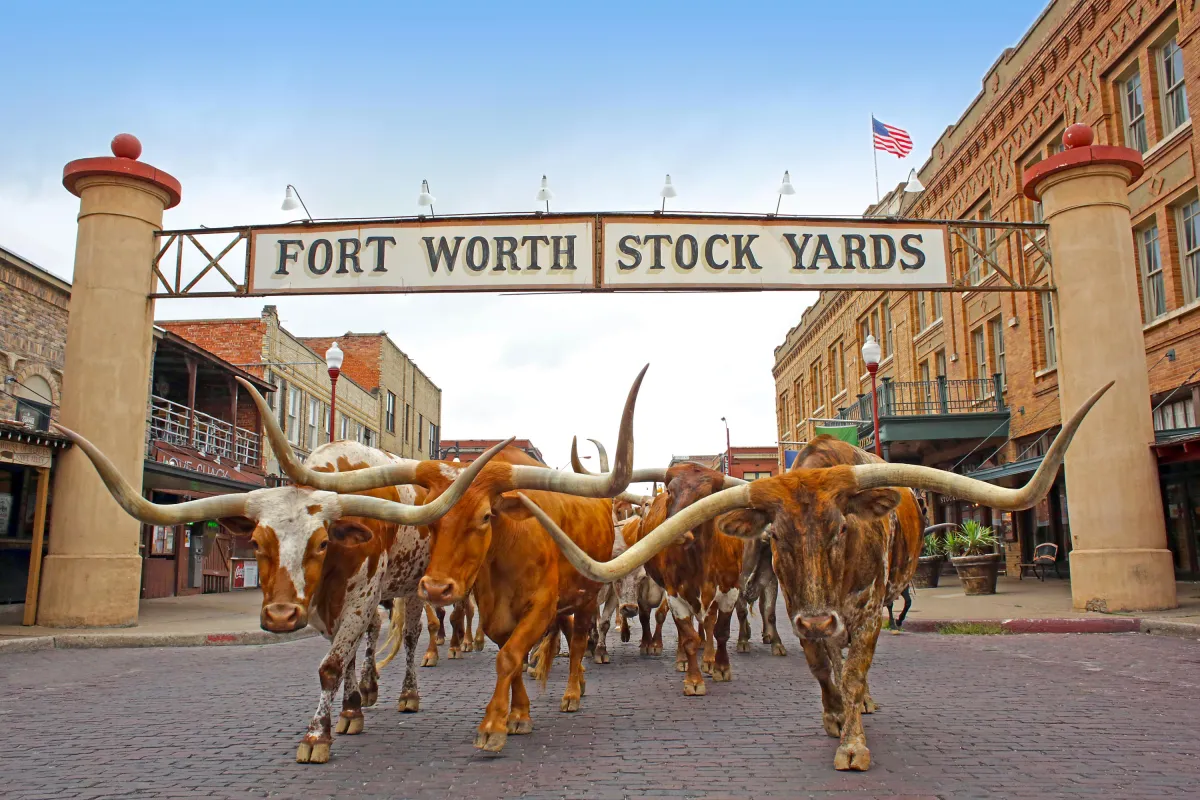 Photo: Fort Worth, Texas, via www.wandermum.co.uk
What changed in the late 1940s was scale and visibility. As hotels normalized the idea of coin-operated self-service washing, entrepreneurs in working-class urban neighborhoods started paying attention. They noticed something the hotel managers had dismissed as a necessary inconvenience: people didn't seem to mind doing their own laundry if the machines were good and the price was right.
In fact, for a large portion of the American population, coin-operated laundry wasn't an inconvenience at all — it was a genuine solution to a genuine problem.
Postwar urban America was dense with families living in apartments, rooming houses, and small homes that had no space for a washing machine, no plumbing configured for one, or no budget for the appliance itself. The postwar economic boom was real, but it didn't reach everyone at the same pace. For millions of working-class Americans, the idea of a private washer and dryer was aspirational rather than practical.
A storefront with eight coin-operated machines and a row of plastic chairs was something they could actually use.
The Laundromat as Social Space
By the early 1950s, coin-operated laundries were spreading through urban neighborhoods at a pace nobody had anticipated. The industry grew from a handful of scattered operations into thousands of storefronts, concentrated primarily in cities and working-class communities where in-home appliances were least common.
What the business model's early adopters didn't fully predict was the social dimension.
A laundromat visit, almost by definition, involves waiting. You load your clothes, add your quarters, and then you have thirty to forty-five minutes with nothing to do but sit in a room with whoever else happens to be there. In neighborhoods where communal outdoor space was limited and third places — spaces that were neither home nor work — were scarce, the laundromat filled a gap.
Regular customers began recognizing each other. Conversations happened. In some neighborhoods, laundromats became informal information exchanges where people learned about job openings, shared childcare, or simply maintained the kind of low-stakes social contact that urban life can quietly erode. Owners who understood this dynamic added small amenities — a television, a vending machine, a bulletin board — and found that customers stayed longer and came back more reliably.
Urban sociologists studying American neighborhood life in the 1960s and 1970s began documenting the laundromat as a genuine community institution, particularly in Black and Latino urban neighborhoods where it often represented one of the few consistently integrated public spaces in an otherwise segregated city landscape.
The Invention Nobody Claimed
Here's what makes this origin story genuinely unusual: nobody invented the American laundromat in any meaningful sense. There was no patent, no founding vision, no entrepreneurial eureka moment. The industry emerged from a staffing problem that hotel managers solved out of necessity, filtered through a series of small business owners who recognized an underserved market, and landed in a social context that gave it a purpose its originators never imagined.
Today there are roughly 35,000 coin-operated laundries operating across the United States, generating approximately $5 billion in annual revenue. The industry is concentrated in urban markets, and research consistently shows that laundromat use tracks closely with income levels — they remain most essential to the Americans who can least afford home appliances.
The hotel managers who first bolted coin slots onto washing machines were trying to solve a linen problem. They ended up accidentally providing a community institution to millions of people who had nowhere else to do their laundry — and, more quietly, nowhere else to simply sit with their neighbors for half an hour.
Some of the most durable American institutions were never planned at all.