The Government's Post-War Junk Pile That Quietly Built America's Obsession With the Outdoors
America Had Just Won a War and Had No Idea What to Do With the Leftovers
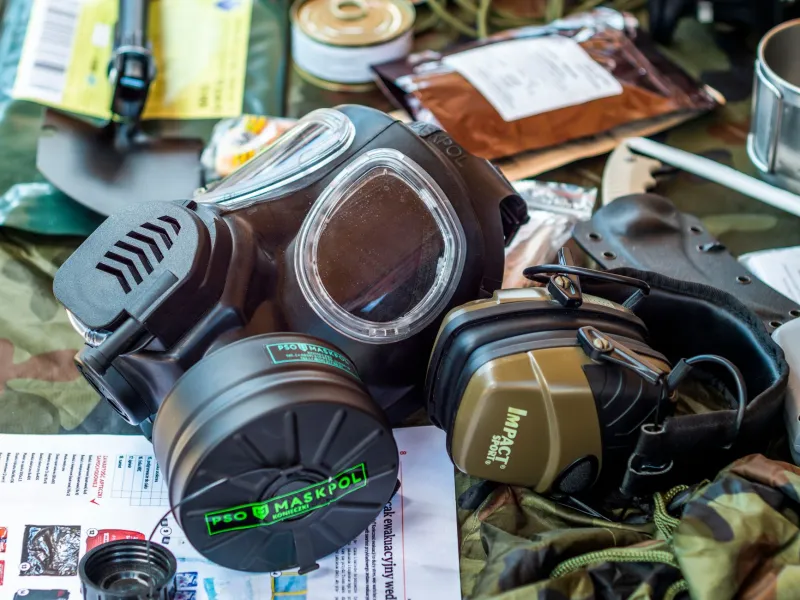
The summer of 1945 brought celebration, relief, and an almost incomprehensible logistics problem. The United States military had spent four years manufacturing equipment at a scale the world had never seen — tents, ropes, carabiners, wool blankets, canvas packs, mess kits, compasses, sleeping bags, and enough nylon cord to wrap the country twice. Winning the war meant stopping the factories. Stopping the factories meant millions of units of gear with nowhere to go.
The government auctioned it. Warehouses full of perfectly functional equipment went to whoever showed up with a low enough bid. And among the buyers were a small number of people who had a specific idea about what to do with it.
The Scrappy Outfitters Who Saw an Opportunity
In the years immediately following the war, a loose network of small outdoor shops began appearing — mostly in cities near mountain ranges or forests, mostly run by veterans or mountaineering enthusiasts who understood what the gear was actually for. They bought surplus equipment in bulk from government auctions and resold it to hikers, climbers, and campers at prices that were almost laughably low compared to what purpose-built civilian outdoor gear would have cost.
A canvas military tent that had cost the government significant money to manufacture might sell at a surplus store for a few dollars. Wool army blankets, carabiners, and pack frames — all designed to perform under extreme conditions — were suddenly accessible to people who had never considered backcountry travel because they'd assumed they couldn't afford the gear.
This was a genuine shift. Before the war, serious outdoor equipment in America was largely the domain of dedicated enthusiasts willing to pay premium prices or skilled enough to make their own. The surplus market blew that gate wide open.
What the Gear Actually Was
It's worth pausing on what "military surplus" actually meant in this context, because it wasn't junk. The US military had poured enormous resources into solving the problem of keeping soldiers functional in extreme environments — cold mountains in Italy and the Pacific, humid jungles, high-altitude terrain. The results were equipment that, by the standards of the mid-1940s, was genuinely sophisticated.
Mountain troops like the famous 10th Mountain Division had trained in Colorado and fought in the Italian Alps using gear specifically designed for cold-weather backcountry movement. Their equipment — crampons, ice axes, layered wool clothing systems, lightweight pack frames — was purpose-built for exactly the kind of terrain that American hikers and climbers were trying to navigate. When those soldiers came home and that equipment hit the surplus market, it didn't need any modification. It just needed a new owner.
 Photo: Italian Alps, via images4.alphacoders.com
Many of the veterans themselves became that new owner. A generation of young men who had been trained to move through mountains, forests, and wilderness came home with both the skills and the appetite for outdoor activity — and suddenly the gear to support it was available at prices that matched a postwar working-class budget.
The Businesses That Grew From the Pile
Some of the companies that took root in this surplus ecosystem went on to define American outdoor culture entirely. REI — Recreational Equipment Inc. — had been founded as a cooperative in Seattle in 1938 by a group of mountaineers who wanted access to quality gear at fair prices. The postwar surplus wave gave them inventory and momentum. The cooperative model, which returned profits to members rather than shareholders, made outdoor gear feel like a community resource rather than a luxury product.
Other regional outfitters followed similar paths. Small shops in Colorado, California, New England, and the Pacific Northwest built their early catalogs around surplus stock, gradually transitioning to purpose-made civilian gear as the surplus supply dried up — but retaining the pricing philosophy and the customer base that the surplus years had created.
The 10th Mountain Division veterans deserve specific mention here. Many of them returned from Italy with both technical skills and entrepreneurial energy, and a remarkable number went on to found or shape ski resorts, mountaineering schools, and outdoor gear companies. Vail, Aspen, and several other major Colorado ski destinations have direct connections to 10th Mountain veterans who looked at the postwar Rocky Mountains and saw opportunity.
 Photo: Rocky Mountains, via hips.hearstapps.com
How a Clearance Sale Became a Cultural Shift
The outdoor recreation industry that exists today — worth well over $800 billion annually in the United States, according to the Outdoor Industry Association — didn't emerge from a single invention or a visionary entrepreneur. It grew, in significant part, from a government clearance problem.
The surplus years did something that no marketing campaign could have manufactured: they democratized access. When canvas packs and sleeping bags that had been tested in combat conditions became available to a schoolteacher or a factory worker for a few dollars, the idea that wilderness recreation was an elite hobby started to crack. National park visitation began climbing through the late 1940s and accelerated sharply through the 1950s. Camping became a family activity. Hiking became something ordinary people did on weekends, not just something mountaineers did on expeditions.
The gear industry that eventually emerged to serve that expanded audience — brands like Patagonia, The North Face, and Columbia, which came later — was built on top of a market that the surplus era had already opened up. The customer who bought a war-surplus wool blanket in 1947 and discovered they liked sleeping under the stars was the same customer, or their child, who bought a technical down jacket in 1975.
The Unplanned Legacy
Nobody in the War Department in 1945 was thinking about the future of American leisure culture when they started auctioning off tent canvas and carabiner stock. They were thinking about warehouse space and budget lines. The outdoor recreation boom that followed was an entirely unintended consequence of a logistics problem.
But that's how a lot of American culture actually formed — not through grand design, but through someone finding a use for something that was otherwise going to waste. The surplus outfitters who bought those government auction lots weren't visionaries. They were opportunists in the best sense of the word: people who looked at a pile of useful things and figured out how to put them in the hands of people who could use them.
The next time you lace up your hiking boots or roll out a sleeping bag under a sky full of stars, there's a longer chain of history attached to that moment than you might expect — one that runs through a government warehouse in 1945 and a generation of veterans who came home ready to spend some time in the mountains.