The Forgotten Accountant's Symbol That Became the Most Important Character in the Digital Age
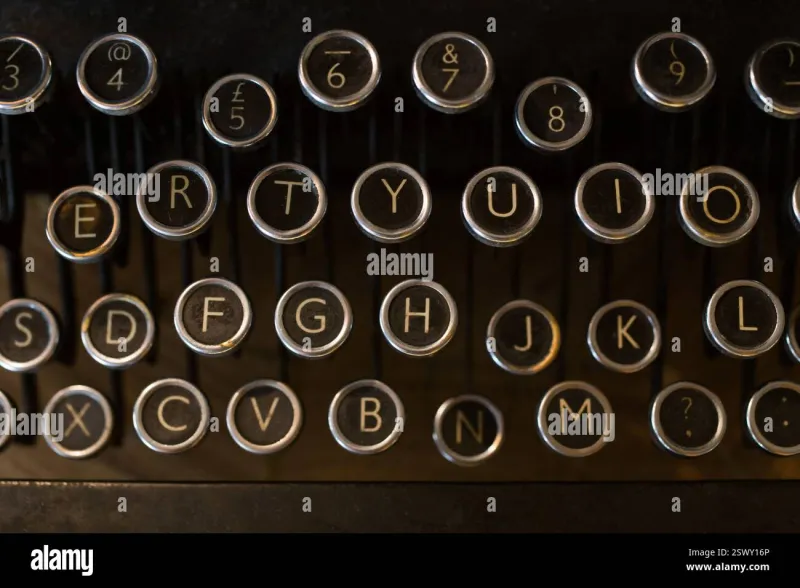
Photo: at symbol keyboard close up vintage typewriter technology, via c8.alamy.com
The Character Nobody Noticed
Look at your keyboard. Somewhere above the number 2, sitting quietly between the exclamation point and the hash, is a small looping symbol that billions of people type every single day. It's on every email address, every social media handle, every digital mention of a person or a brand. It is, in terms of raw usage, one of the most consequential characters in the history of written language.
For most of history, nobody cared about it at all.
The @ symbol — technically called the "commercial at" — spent the better part of five centuries doing the unglamorous work of accounting shorthand, a notational convenience for merchants who needed a quick way to write "at the rate of" without using three full words. It lived on invoices. It died on invoices. And then, in a single afternoon in 1971, everything changed.
Where the Symbol Came From
The exact origins of @ are genuinely contested, which is a polite way of saying historians have been arguing about it for decades. The most widely accepted theory traces it to medieval European monasteries, where scribes copying texts by hand were always looking for ways to save time. Writing the Latin word ad — meaning "at" or "toward" — over and over in long manuscripts was tedious, and some scribes began merging the letters into a single flowing character. The d curved back around the a and eventually became the looping symbol we recognize today.
By the time printing presses arrived and standardized written language, @ had found a comfortable home in commercial correspondence. Spanish and Portuguese merchants used it to denote units of a specific weight called the arroba. Italian traders used it for price notation. English-speaking merchants adopted it as shorthand for "at the rate of" — so a bill might read "12 apples @ 3 cents" rather than spelling it out.
It was useful. It was specific. And it was completely unremarkable. When the first typewriters were designed in the late 19th century, @ earned a spot on the keyboard almost by default — not because anyone expected great things from it, but because commercial typists needed it to write invoices.
For the next 80 years, that's essentially all it did.
The Engineer Who Needed a Separator
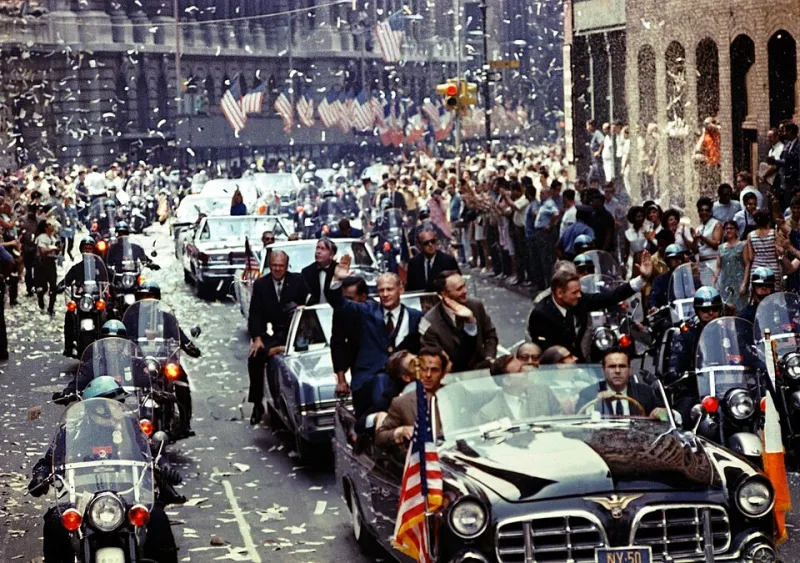
In 1971, a computer engineer named Ray Tomlinson was working on ARPANET — the early government-funded network that would eventually evolve into the internet. Tomlinson's specific task was to figure out how to send messages between different computers on the network, not just between users on the same machine. This sounds simple now. In 1971, nobody had done it.
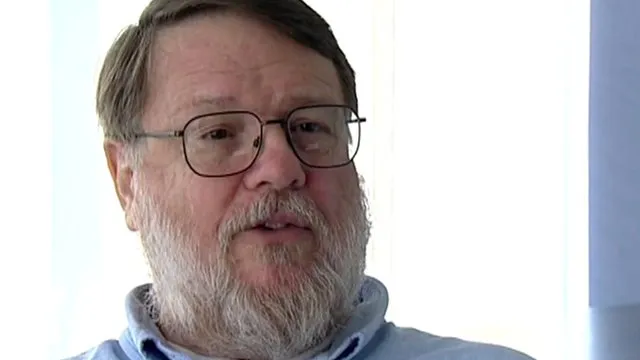 Photo: Ray Tomlinson, via c.files.bbci.co.uk
The technical challenge he faced was one of address formatting. To send a message to a specific person on a specific computer, you needed a way to write both pieces of information in a single string of characters that a machine could parse. You needed something that said: this name, at this machine.
Tomlinson looked at the keyboard in front of him and needed a character that appeared nowhere in anyone's name or any computer's name — something unambiguous, something that already carried a faint meaning of location or placement. He needed a separator.
He chose @.
It was, by his own later account, a practical decision made in minutes. He wasn't thinking about cultural legacy or linguistic history. He needed a character that wouldn't cause confusion, and @ was sitting right there, underused and available. The first email address format — username@hostname — was born not from inspiration but from convenience.
Tomlinson later said he chose it partly because it seemed like it might be obsolete soon anyway. He was spectacularly wrong.
From Accounting to Inbox
For the first decade or so after Tomlinson's decision, @ remained largely invisible to anyone outside technical computing circles. Email existed, but it was a tool for researchers and government contractors, not something ordinary Americans thought about.
That changed through the 1980s and 1990s as personal computers spread into homes and offices, and email followed. By the mid-1990s, the @ symbol was appearing in television commercials, on business cards, in newspaper classified ads. It had migrated from the invoice ledger to the cultural foreground in the space of about twenty years.
Then social media gave it a second life entirely. Twitter, launching in 2006, adopted the @ symbol as the standard way to mention or direct a message at another user — a convention that spread to virtually every other platform that followed. Suddenly @ wasn't just an address marker. It was a verb. To "at" someone meant to call them out, to reference them, to pull them into a conversation.
The symbol that medieval scribes invented to save time copying Latin text had become a fundamental unit of digital social interaction.
A Character That Outlived Its Era
What makes the @ story so remarkable is how completely accidental its dominance was. Tomlinson didn't choose it because of its history or its meaning. He chose it because it was there and it worked. The symbol's entire commercial-era identity — as a price notation tool — was actually fading by 1971. Computers and standardized invoicing software were already making it redundant in accounting contexts.
In other words, @ was rescued from obsolescence by the very technology that was making it obsolete in its original role.
Today the symbol is recognized across virtually every language and culture on earth, even in places with no tradition of Latin-derived writing. In some countries it's acquired local nicknames that reflect its looping shape: "little snail" in Italian, "monkey tail" in Dutch, "elephant's trunk" in Danish. Each name captures the same visual detail — that distinctive curl — that a medieval scribe first drew to save a few seconds of writing time.
All of that history, from monastery to ARPANET to your Instagram handle, traces back to a single practical choice made on a keyboard in 1971. Ray Tomlinson wasn't trying to change how the world communicates. He just needed a separator.
Turns out that was enough.