The Man Who Drew the Barcode Never Made a Dime From It
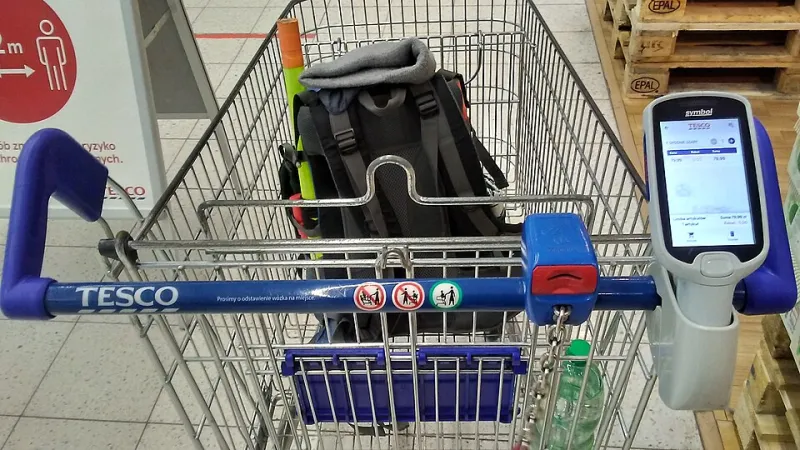
Photo: Warszawska róg Szerokiej w Tomaszowie Mazowieckim, w województwie łódzkim, PL, EU, CC0, via Wikimedia Commons
Look at almost any object within arm's reach right now. The water bottle on your desk, the book on your shelf, the cereal box on your counter. Flip it over. There it is — that small rectangle of parallel lines that has become so universal it's practically invisible. You've probably never thought about where it came from.
The answer involves a frustrated graduate student, a beach in Miami, a Morse code epiphany, and one of the longest gaps between invention and adoption in modern commercial history.
The Problem That Needed Solving
In 1948, a supermarket executive named Bernard Silver overheard something that stuck with him. The president of a local grocery chain was pleading with a dean at the Drexel Institute of Technology in Philadelphia, asking whether the school could research a way to automatically capture product information at checkout. The dean said no. Silver thought it was a fascinating problem.
He brought the idea to a fellow graduate student named Norman Woodland, and the two of them started sketching solutions. Their early attempts were creative but impractical — one involved ultraviolet ink that faded too quickly under store lighting, another required equipment so expensive it made no commercial sense.
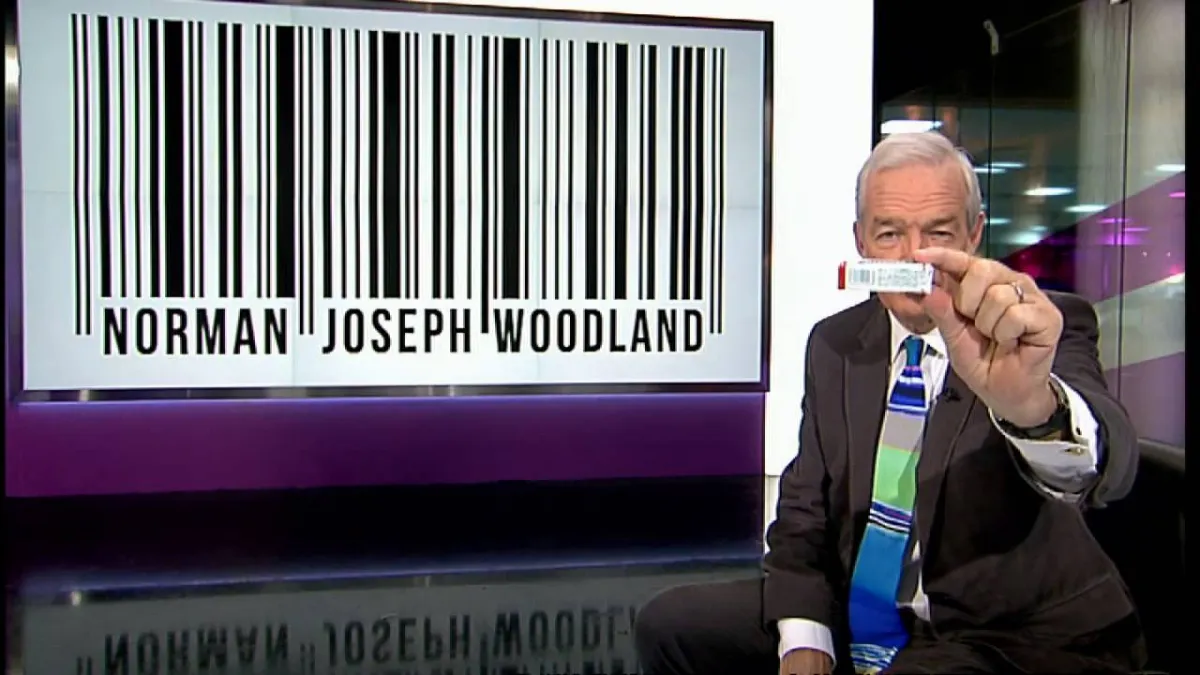 Photo: Norman Woodland, via i.ytimg.com
Then Woodland went home to his family's apartment in Miami Beach and sat on the sand to think.
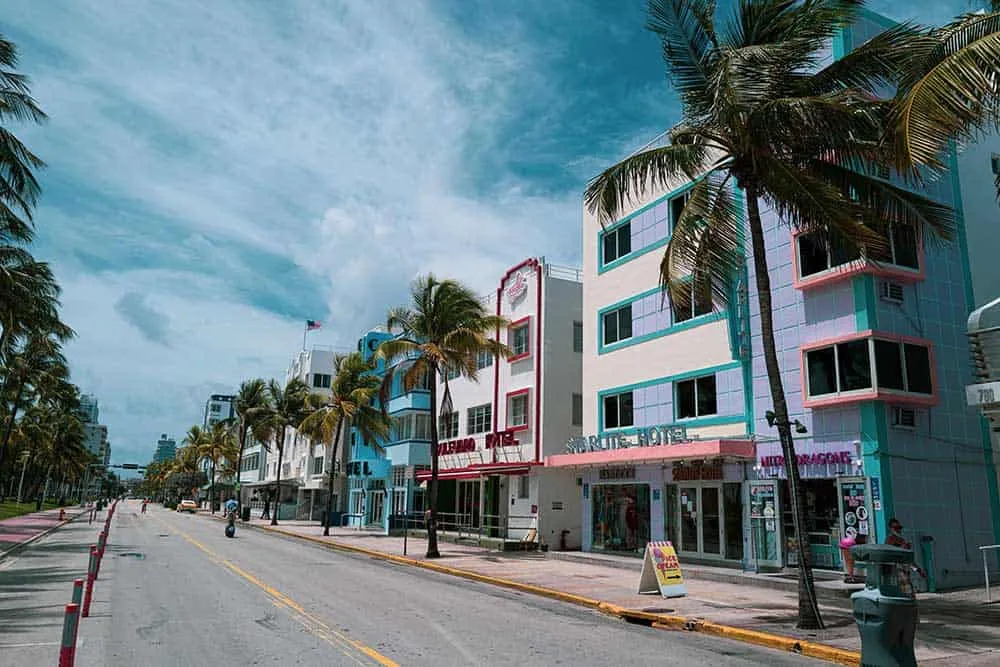 Photo: Miami Beach, via www.treksplorer.com
A Morse Code Moment on a Florida Beach
Woodland was familiar with Morse code — he'd learned it as a Boy Scout — and as he sat there dragging his fingers through the sand, something clicked. Morse code worked by varying the length of signals: dots and dashes, short and long. What if you took that same logic and rotated it ninety degrees? Instead of dots and dashes arranged in sequence, you'd have lines of varying thickness, readable not by a trained ear but by a beam of light.
He drew the concept in the sand with his finger. Parallel lines, thick and thin, encoding information that a scanner could read in a fraction of a second.
Woodland and Silver filed a patent in 1949. It was granted in 1952. The patent drawing — elegant, simple, and ahead of its time by roughly two decades — described a system that would eventually scan billions of products every single day in stores across the planet.
Then almost nothing happened.
The Long Wait
The problem wasn't the concept. The concept was sound. The problem was the technology required to make it work in a practical retail environment didn't yet exist at a price that made commercial sense.
Reading a barcode requires a consistent, focused light source and a sensor capable of interpreting the reflected signal accurately at speed. In 1952, the best available option was a 500-watt incandescent bulb — hot, expensive, and about as practical for a checkout counter as a small sun. Woodland and Silver knew their invention was waiting on hardware that hadn't been built yet.
In 1952, they sold their patent to IBM for a reported $15,000. It seemed like a reasonable transaction at the time. IBM shelved it.
Woodland went on to a long career at IBM, working on various projects, and the barcode patent eventually expired in 1969 — still largely unused, still waiting for the technology to catch up with the idea.
The Supermarket That Changed Everything
By the early 1970s, the hardware had finally arrived. Lasers were small enough, cheap enough, and stable enough to read printed lines reliably. A coalition of grocery industry groups had spent years working toward a standardized product code — what became the Universal Product Code, or UPC — and the infrastructure to support it was finally coming together.
On June 26, 1974, at a Marsh Supermarket in Troy, Ohio, a cashier named Sharon Buchanan ran a ten-pack of Wrigley's Juicy Fruit gum across a laser scanner at 8:01 in the morning. The scanner beeped. The register recorded the price. The transaction took roughly one second.
 Photo: Marsh Supermarket, via live.staticflickr.com
It was the first retail barcode scan in history, and that pack of gum is now in the Smithsonian Institution's collection.
The grocery industry's adoption of barcode scanning was initially slow — stores were skeptical of the upfront equipment costs, and manufacturers resisted printing codes on their packaging until enough stores had scanners to make it worthwhile. It was a classic chicken-and-egg problem that took most of the late 1970s to resolve.
By 1980, adoption was accelerating. By 1984, most major supermarket chains had converted. By the end of the decade, the beep of a barcode scanner was one of the most common sounds in American daily life.
What It Built
The barcode didn't just speed up checkout lines. It fundamentally restructured how American retail operated.
Before automated scanning, inventory management was a labor-intensive guessing game. Store managers estimated stock levels, over-ordered to avoid shortfalls, and absorbed significant losses from products that expired or went unsold. Barcode scanning made it possible to track exactly what sold, when, and in what quantity — data that transformed supply chain management, reduced waste, and gave retailers a granular understanding of consumer behavior they'd never had before.
Walmart, in particular, built much of its legendary supply chain efficiency on barcode-driven inventory systems that allowed it to restock shelves faster and more accurately than competitors. The barcode wasn't just a checkout tool — it was the foundation of modern retail logistics.
Beyond grocery stores, the technology spread into warehouses, hospitals, libraries, shipping companies, and manufacturing floors. The same basic principle that Woodland drew in the sand on a Miami beach in 1948 now tracks packages moving through FedEx hubs, identifies patients in hospital wristbands, and catalogs books in public libraries.
The Inventor Who Missed the Payoff
Norman Woodland lived until 2012, long enough to see the technology he sketched with his fingers become one of the most scanned inventions in human history. He received recognition late in life — IBM gave him its highest internal honor, and he was awarded the National Medal of Technology in 1992 by President George H.W. Bush.
But the patent had long since expired. The $15,000 IBM paid in 1952 was all he ever received from an invention that now underpins trillions of dollars in annual commerce.
The barcode is everywhere. The man who first imagined it got almost nothing. That's not a cautionary tale about patents — it's just what happens when an idea arrives twenty years before the world is ready for it.