The Chemistry Lab Accident That Put Perfume Inside Your Magazine
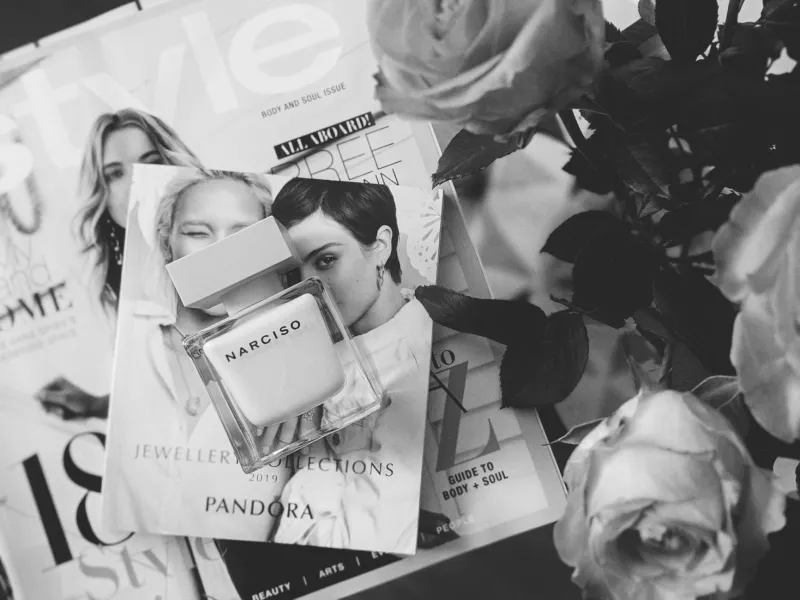
Flip through an old issue of a glossy American magazine and you might still find one: a thick, slightly waxy insert card, usually adorned with a perfume brand's logo and the instruction to scratch here. Do it, and a scent blooms out of nowhere — floral, musky, sharp, sweet — from what looked like a completely inert piece of paper a second ago.
It's a small, strange miracle of chemistry. And like a lot of miracles, it happened by accident, in a lab that was trying to solve an entirely different problem, and then got hijacked by a marketing executive with an idea that everyone else thought was insane.
The scratch-and-sniff story is the story of how a packaging headache became a billion-dollar industry.
The Fragrance Industry Had a Problem
By the 1960s, the American perfume and fragrance market was booming. Department store counters were cathedrals of glass bottles and spritzed air, and the industry was spending heavily on advertising. But there was a fundamental limitation that no amount of creative photography could solve: you can't smell a picture.
Print advertising was the dominant medium for luxury goods. Full-page spreads in Vogue, Harper's Bazaar, and Cosmopolitan were how fragrance brands reached their customers. But a photograph of a perfume bottle communicates almost nothing about what the perfume actually smells like. Consumers were being asked to make a significant purchase — quality fragrances were expensive — based entirely on visual cues and brand reputation.
The industry had tried small glass vials inserted into magazine pages, but they leaked, they broke, and they were a logistical nightmare for publishers. Impregnating paper with scent directly resulted in a product that off-gassed too quickly and smelled like chemicals within days. The fragrance, quite literally, kept escaping before it could reach the customer.
Somebody needed to figure out how to trap a smell.
Microencapsulation Was Born in a Different Context
The breakthrough came not from a perfume lab but from the printing and paper industry. In the late 1950s and early 1960s, researchers at the National Cash Register Company — yes, the cash register people — were working on a technology called microencapsulation for a completely unrelated purpose: creating carbonless copy paper.
The idea was elegant. Tiny microscopic capsules, each smaller than a human hair is wide, could be filled with a liquid and coated onto a surface. When pressure was applied, the capsules ruptured and released their contents. NCR used this to create paper that transferred ink when written on, eliminating the need for messy carbon sheets.
The chemists working on this process understood something important: the capsules could hold almost anything. The specific liquid inside was a secondary concern. What mattered was the shell — thin enough to break under pressure, durable enough to survive storage and handling.
Fragrance chemists were paying attention.
The 3M Connection and the Smell That Stayed Put
Through the late 1960s and into the 1970s, researchers at 3M and several other chemical companies began experimenting with microencapsulation as a delivery system for fragrance compounds. The challenge was finding capsule materials that would protect volatile scent molecules — which are, by nature, desperate to evaporate — while remaining stable on paper for months or years.
It took years of trial and error. Early attempts produced capsules that were either too fragile (they burst during printing) or too tough (they required so much pressure to open that they were impractical). The scent compounds themselves had to be reformulated, since some fragrance ingredients degraded when enclosed or reacted badly with the capsule material.
The eventual solution involved gelatin-based and later polymer-based microcapsules, small enough to be applied to paper in massive quantities during the printing process, stable enough to survive being bound into a magazine, and fragile enough to rupture from the light friction of a fingernail. Each tiny capsule was essentially a miniature perfume bottle, sealed until the moment someone scratched the surface.
By the mid-1970s, the technology was commercially viable. The question was what to do with it.
The Executive Who Saw a Magazine Revolution
The leap from chemistry lab to consumer product came from an unexpected direction. Advertising executive Annette Green, working with fragrance industry contacts in the early 1970s, had been thinking about the print advertising problem from the other side. She wasn't a chemist, but she understood that scent was the most emotionally powerful of the senses — and that the fragrance industry was leaving an enormous opportunity on the table by relying entirely on visual advertising.
When she encountered early demonstrations of microencapsulation technology, she immediately saw its application. The pitch she brought to fragrance companies was simple and radical: instead of showing customers a picture of a perfume bottle, let them smell the actual perfume, right there in the magazine, for free.
The initial response from publishers was skeptical. Scent in a magazine felt gimmicky. There were concerns about readers with allergies, about the technology's reliability at print-run scale, about the cost. Some editors worried it would cheapen the luxury positioning that high-end fragrance brands depended on.
The data changed the conversation. Early tests showed that readers who encountered scented inserts were dramatically more likely to visit a store and purchase the fragrance than those who saw a standard print advertisement. The conversion rates were, by the standards of print advertising, extraordinary.
From Novelty to Industry Standard
The first large-scale scratch-and-sniff fragrance advertisements appeared in American magazines in the late 1970s, and the response from consumers was immediate and enthusiastic. Within a few years, scented inserts had become a standard feature of the American magazine experience, particularly in fashion and beauty publications.
The technology didn't stay in perfume. Scratch-and-sniff found its way onto children's stickers, food packaging, promotional mailers, and even scratch cards. The same microencapsulation chemistry that had been developed to solve a fragrance packaging problem turned out to be useful for delivering virtually any scented message to any printed surface.
Today, the scratch-and-sniff insert is so familiar that it barely registers as remarkable. But it represents a genuine leap in sensory marketing — the first time a mass-market medium could reliably deliver a smell to a consumer at scale.
All because a group of chemists were trying to replace carbon paper, and someone else realized they'd accidentally built the world's smallest perfume bottle.