The Made-Up Number That Turned Walking Into a National Obsession
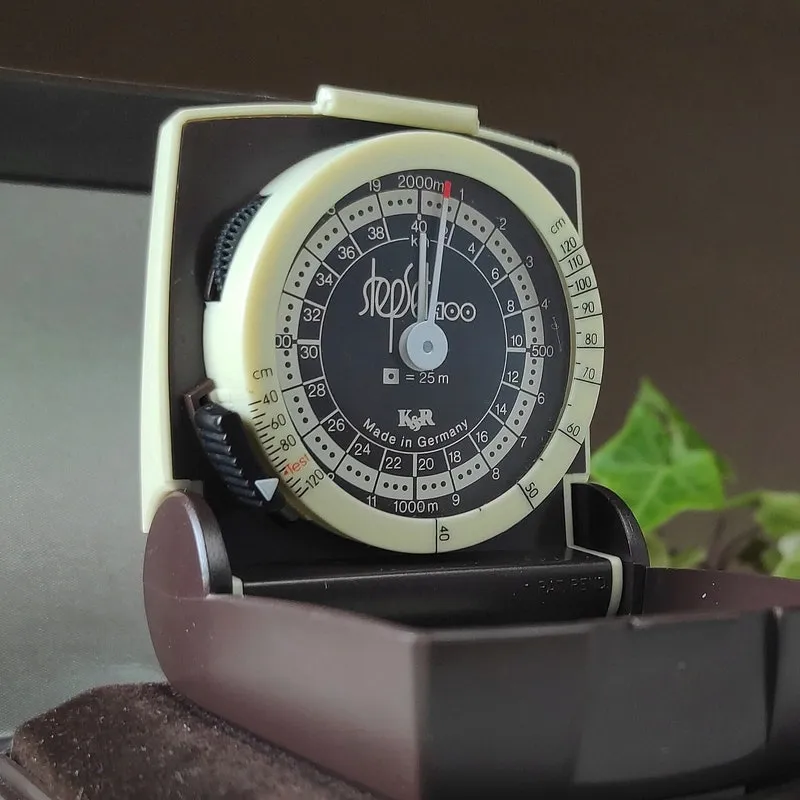
Photo: vintage pedometer step counter fitness tracker history, via i.etsystatic.com
Check your phone right now. Odds are there's a step count somewhere on the screen — maybe in a health app, maybe on a smartwatch face, maybe in a notification gently reminding you that you're 3,000 steps short of your daily goal. That goal, almost certainly, is 10,000 steps.
But here's the thing nobody mentions when they strap on their fitness tracker in the morning: that number was invented by a marketing executive in Tokyo in 1965. It has almost no scientific basis. And the device that popularized it was originally designed to capitalize on Olympic fever — not to revolutionize how the world thinks about health.
A Gadget Built for the Olympics
In 1964, Tokyo hosted the Summer Olympics. The games sparked a wave of national enthusiasm for fitness across Japan, and a company called Yamasa Tokei Keiki decided to ride that wave. They developed a small mechanical pedometer — a clip-on device that counted footsteps using a swinging pendulum mechanism — and prepared to launch it to a newly health-conscious public.
The device needed a name. They landed on Manpo-kei, which translates roughly to "10,000 steps meter." The number wasn't pulled from any clinical study or exercise physiology research. It was chosen partly because the Japanese character for 10,000 — 万 — looks vaguely like a person walking, and partly because it sounded like an ambitious, satisfying daily target. In other words, it was marketing.
The Manpo-kei sold reasonably well in Japan through the late 1960s, but it never became a cultural phenomenon. It was a novelty item — a curiosity for the health-minded, not a mainstream fixture. Within a decade, it had largely faded from the market.
The Long Quiet
For most of the 1970s, the pedometer existed in a kind of obscurity. A few versions circulated in the United States as novelty gifts, the kind of thing you'd find in a catalog next to a pocket magnifier or a travel chess set. Nobody was tracking their steps with any particular intention. Walking was just walking.
Then came the 1980s.
The aerobics boom — powered by Jane Fonda workout tapes, neon spandex, and a growing cultural anxiety about heart disease — turned fitness into a mainstream American preoccupation. Suddenly, people wanted metrics. They wanted to quantify their effort. Running had the stopwatch. Cycling had the odometer. Walking, the most accessible exercise of all, had almost nothing.
Manufacturers in the US and Japan began reviving the pedometer concept, this time marketing it directly to the fitness-curious middle class. The 10,000 steps figure, already embedded in the original Japanese branding, traveled with the device. It sounded scientific. It sounded specific. It stuck.
Silicon Valley Picks It Up
The pedometer remained a niche product through the 1990s — useful, but not exactly exciting. What changed everything was the smartphone.
When Apple introduced the iPhone's accelerometer technology and later built dedicated health-tracking frameworks into iOS, step counting suddenly became effortless. You didn't need to clip anything to your waistband. Your phone was already doing it. Fitbit launched in 2009 and turned the step counter into a wearable status symbol. By 2014, the Apple Watch had arrived, and 10,000 steps was baked directly into the default daily goal — no explanation given, no source cited.
The number spread through corporate wellness programs, health insurance incentive schemes, and elementary school PE curricula. The Centers for Disease Control began referencing daily step counts in public health materials. Doctors started recommending it to patients, often without knowing exactly where the target came from.
So What Does the Science Actually Say?
Researchers have spent the last two decades trying to figure out whether 10,000 steps is actually meaningful — and the answer is complicated.
A 2019 study from Harvard Medical School tracked more than 16,000 older women and found that mortality risk dropped significantly as daily step counts increased — but the benefits plateaued at around 7,500 steps, not 10,000. A 2021 study published in JAMA Internal Medicine reached similar conclusions. More steps are generally better than fewer, but the specific 10,000 threshold appears to be arbitrary.
Dr. I-Min Lee, one of the lead researchers on the Harvard study, traced the number directly back to the 1965 Japanese pedometer campaign. "It was a business slogan," she told reporters. There was no evidence that anyone had calculated it as an optimal target.
That revelation made headlines. And then people kept chasing 10,000 steps anyway.
Why the Number Won't Die
There's something deeply human about the persistence of a round number with a good story behind it. Ten thousand feels complete. It feels earned. It's easy to remember and easy to talk about — "Did you hit your steps today?" is a more natural conversation than "Did you hit your 7,340 steps today?"
The fitness industry understood this intuitively, even if nobody planned it that way. A Japanese marketing team in 1965 needed a catchy product name. A Silicon Valley product manager in 2014 needed a default setting. Millions of Americans in between needed a simple target to organize their health habits around. The made-up number served all three.
Today, the global fitness tracker market is worth over $60 billion. Smartwatches, rings, clip-on sensors, and shoe-embedded chips all count steps with extraordinary precision. The technology is genuinely impressive.
The goal they're all measuring you against, though, is still the one a Tokyo ad man invented to sell a gadget at the height of Olympic season.
Next time your watch buzzes to tell you you're 800 steps away from your daily goal, that's the moment you're living in — the long tail of a 1965 marketing decision that accidentally wrote the rules of modern fitness culture.