The 150-Year-Old Typing Mistake Baked Into Every Keyboard You've Ever Touched
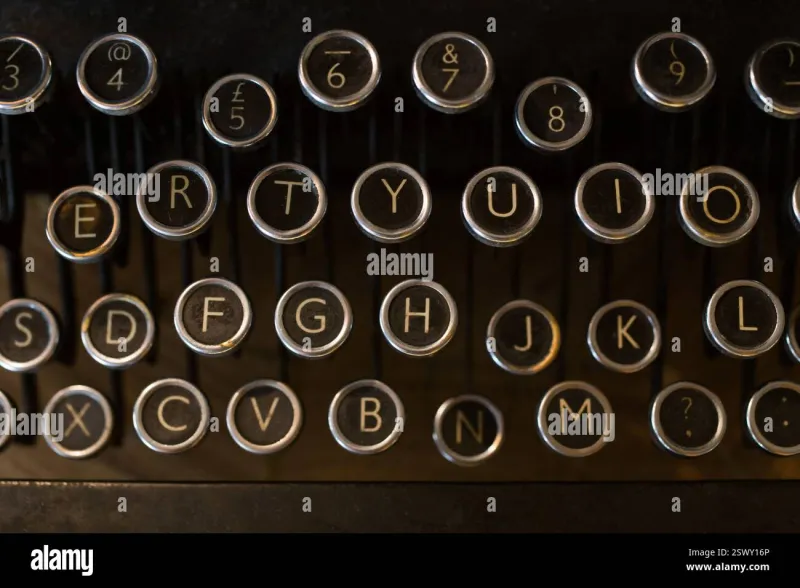
Look down at your keyboard for a second. That arrangement of letters — Q, W, E, R, T, Y — isn't logical. It isn't alphabetical. It isn't even particularly efficient. And yet, right now, billions of people around the world use it without a second thought. The story of how that layout got there is one of the stranger accidents in the history of American technology.
A Machine That Kept Jamming Itself
In the early 1870s, a Milwaukee newspaper editor and amateur inventor named Christopher Latham Sholes was trying to make his typewriter commercially viable. The machine worked — technically — but it had a serious problem. When a typist built up speed, the metal arms carrying each letter would swing up and strike the ink ribbon in rapid succession. Type two neighboring keys too quickly, and those arms would tangle together, jamming the machine and forcing the typist to stop and physically separate them by hand.
Sholes needed a fix. His solution was counterintuitive but practical: rearrange the keys so that commonly paired letters in the English language — combinations like "th," "he," and "st" — were placed far apart on the keyboard. The physical distance between the keys meant the mechanical arms had more time to fall back into place before the next one came swinging up. In other words, the layout was deliberately designed to slow typists down.
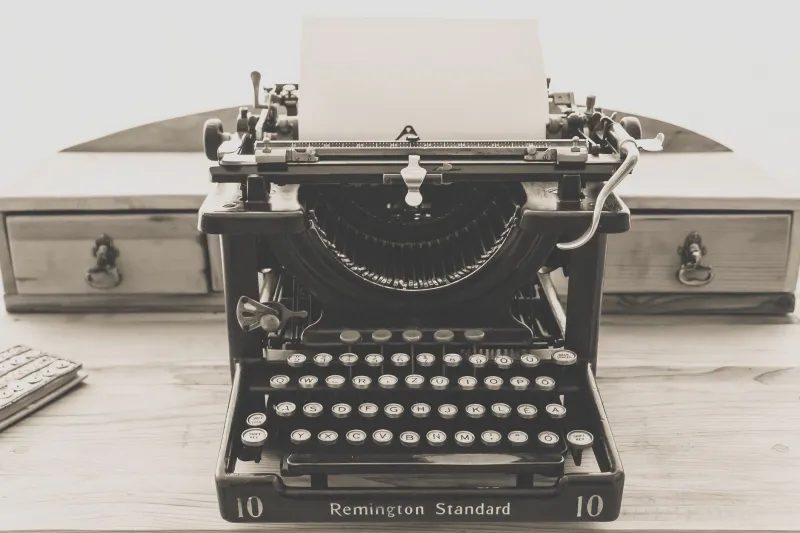
By 1873, Sholes had licensed his design to the Remington Arms Company, which was looking for new products after the Civil War had dried up demand for rifles. Remington refined the layout slightly and began mass-producing the first commercial typewriter — the Remington No. 1 — featuring what we now recognize as the QWERTY arrangement. It wasn't elegant. It was a mechanical band-aid. But it worked well enough, and Remington sold a lot of machines.
The Problem That Disappeared — and the Layout That Didn't
Here's where it gets interesting. By the early 20th century, typewriter engineering had advanced significantly. The jamming problem that QWERTY was designed to solve had been largely eliminated. Machines were faster, better built, and more reliable. There was no longer any mechanical reason to keep letters separated by frequency of use.
And yet QWERTY stayed.
The reason was simple and deeply human: millions of people had already learned to type on QWERTY keyboards. Businesses had invested in QWERTY machines. Typing schools taught QWERTY. A generation of American office workers had trained their fingers to find those keys without looking. Switching the layout would mean retraining an entire workforce — and nobody wanted to pay that cost.
This is what economists call a "network effect" locked into a "path dependency." Once enough people commit to a system, the system becomes self-reinforcing regardless of whether it's actually the best option.
The Man Who Tried to Fix It
In 1936, an educational psychologist named August Dvorak — yes, he was related to the composer — patented an alternative keyboard layout he'd spent years developing. The Dvorak Simplified Keyboard placed the most commonly used English letters on the home row (the middle row where your fingers naturally rest), and arranged vowels on the left side, consonants on the right. Studies suggested it could significantly increase typing speed and reduce finger fatigue.
Dvorak spent decades advocating for his layout. The U.S. Navy ran trials during World War II that reportedly showed Dvorak typists outperforming QWERTY users. A small community of devoted Dvorak users has kept the flame alive ever since — most modern operating systems still include it as an option buried somewhere in the settings.
But it never came close to replacing QWERTY. Not even a little.
By the time Dvorak's layout was ready for the world, the world was already too committed to move.
When Computers Arrived and Changed Nothing
If there was ever a moment to reset the keyboard, it was the transition from mechanical typewriters to personal computers in the late 1970s and early 1980s. The entire reason QWERTY existed — the physical mechanics of typewriter arms — was completely irrelevant to a digital machine. A computer keyboard has no arms to jam. The letters could have been arranged in any configuration imaginable.
Instead, the first PC keyboards were built to match what office workers already knew. IBM's influential Model M keyboard, released in 1984 and still considered a gold standard by keyboard enthusiasts, used QWERTY. Every major computer manufacturer followed suit. The transition to digital technology, which could have been a clean break from a 19th-century workaround, instead calcified it further.
Today, QWERTY is baked into touchscreens, voice-to-text interfaces that still display virtual keyboards, and even the mental model most people carry around for how letters should be arranged. Autocorrect algorithms are calibrated around QWERTY's layout. Swipe-to-type features on smartphones are built around the spatial relationships between its keys.
Why We're Probably Stuck With It Forever
The QWERTY story is a perfect illustration of how technology doesn't always evolve toward the best solution — it evolves toward the most entrenched one. The layout survived not because it was superior, but because it arrived first and spread fast enough to become infrastructure.
Every time you fire off a text or bang out an email, you're using a system that was engineered to accommodate the mechanical limitations of a machine built before the light bulb was commercially available. The problem it solved is long gone. The solution remains, embedded in muscle memory across the entire planet.
Sholes never intended to define how humanity would interact with language for the next century and a half. He was just trying to stop some metal arms from getting tangled. It turned out that was enough.