The Color Scientists Never Wanted That Became America's Most Recognizable Shade
The Color Scientists Never Wanted That Became America's Most Recognizable Shade
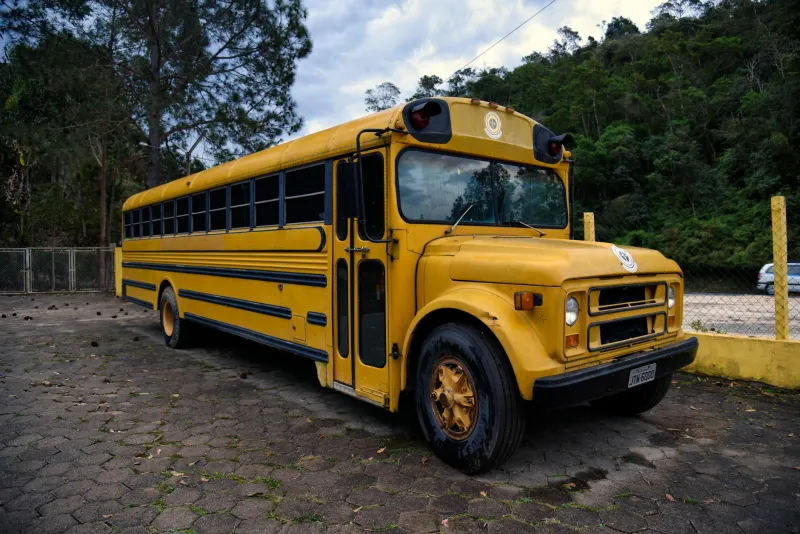
Every morning across America, millions of children climb aboard vehicles painted in a shade so distinctive that it needs no introduction. That particular yellow—officially called National School Bus Glossy Yellow—wasn't chosen because it was beautiful, inspiring, or even particularly appealing. In fact, it was selected for exactly the opposite reason.
The 1939 Conference That Changed Everything
In April 1939, Dr. Frank Cyr, a professor at Columbia University's Teachers College, organized what would become one of the most influential color decisions in American history. The Manhattan conference brought together transportation officials, paint manufacturers, and education experts with a single goal: standardize school bus safety across the nation.
 Photo: Columbia University's Teachers College, via www.10000birds.com
 Photo: Dr. Frank Cyr, via file1.hkepc.net
At the time, American school buses were a chaotic rainbow. Some districts painted them red like fire trucks, others chose white or even blue. Many rural areas used converted farm trucks in whatever color happened to be available. This inconsistency wasn't just an aesthetic problem—it was a safety crisis waiting to happen.
The Science Behind the Selection
Dr. Cyr and his team weren't interior designers making subjective choices. They were scientists solving a visibility problem. Through extensive testing, researchers discovered something counterintuitive: the human eye processes yellow faster than any other color in the spectrum.
More importantly, this particular shade of yellow—a mix that leaned slightly toward orange—remained visible in conditions where other colors disappeared. In dawn fog, twilight shadows, or the brief moments when headlights swept across intersections, this yellow cut through visual noise like nothing else.
The conference participants tested dozens of shades before settling on what they initially called "National School Bus Chrome Yellow." The name itself reveals their priorities: this wasn't about creating something beautiful, but something functional.
From Rejection to Recognition
Ironically, paint manufacturers initially resisted the standardization. Custom colors meant higher profits, and this particular yellow was considered harsh and unappealing by commercial standards. One paint company executive reportedly called it "the ugliest shade we've ever been asked to mass-produce."
But Dr. Cyr understood something the paint industry didn't: sometimes the most effective solutions are the ones nobody particularly likes. This yellow wasn't meant to be admired—it was meant to be seen.
The conference established not just the color, but strict specifications for its application. The paint had to maintain its visibility properties for years of weather exposure, resist fading, and meet specific reflectivity standards. These technical requirements meant that by 1974, when the federal government officially adopted the standard, American school buses had become the most consistently colored fleet of vehicles in the world.
The Unexpected Psychology of Yellow
What Dr. Cyr's team discovered accidentally was that this yellow triggers specific psychological responses. Studies conducted decades later revealed that the color creates an automatic caution response in drivers—even when they can't consciously identify why they're being more careful.
This psychological effect extends beyond traffic safety. The color has become so associated with childhood and protection that it now appears on playground equipment, crossing guards' vests, and school zone signs. A shade chosen purely for visibility accidentally became America's symbol of child safety.
Why It Never Changed
Eighty-four years later, American school buses still wear the same shade Dr. Cyr selected in 1939. This consistency is remarkable in a culture that constantly updates everything from phone designs to fashion trends.
The reason is simple: it works too well to change. Modern LED lights, reflective tape, and digital safety systems have been added to school buses, but the basic yellow remains untouched. Transportation engineers have tested newer, more sophisticated color combinations, but none match the instant recognition and visibility of National School Bus Glossy Yellow.
The Global Impact
While Dr. Cyr was solving an American problem, his color choice influenced school transportation worldwide. Countries from Canada to parts of Europe adopted variations of the same yellow for their school vehicles. The shade that American paint companies once considered unmarketable became an international standard.
Today, that rejected color appears on an estimated 480,000 school buses across America, transporting 25 million children daily. It's visible from space in satellite images, instantly recognizable in movies filmed anywhere in the world, and so deeply embedded in American culture that most people can identify "school bus yellow" even when shown color swatches with no context.
The Legacy of Practical Beauty
Dr. Cyr's 1939 conference proves that the most enduring design decisions often come from solving practical problems rather than pursuing aesthetic ideals. The scientists who gathered in Manhattan weren't trying to create an iconic color—they were trying to keep children safe.
Instead, they accidentally created one of the most recognized shades in human history. Every school day, millions of Americans see this color and instinctively know what it means: slow down, children present, safety first.
Sometimes the colors that define our world aren't chosen by artists or designers, but by scientists with clipboards, solving problems most of us never think about. And sometimes, those practical solutions become more beautiful than anything deliberately designed to please the eye.