How a Bored Housewife's Sales Trick Quietly Flooded America With Plastic It Couldn't Get Rid Of
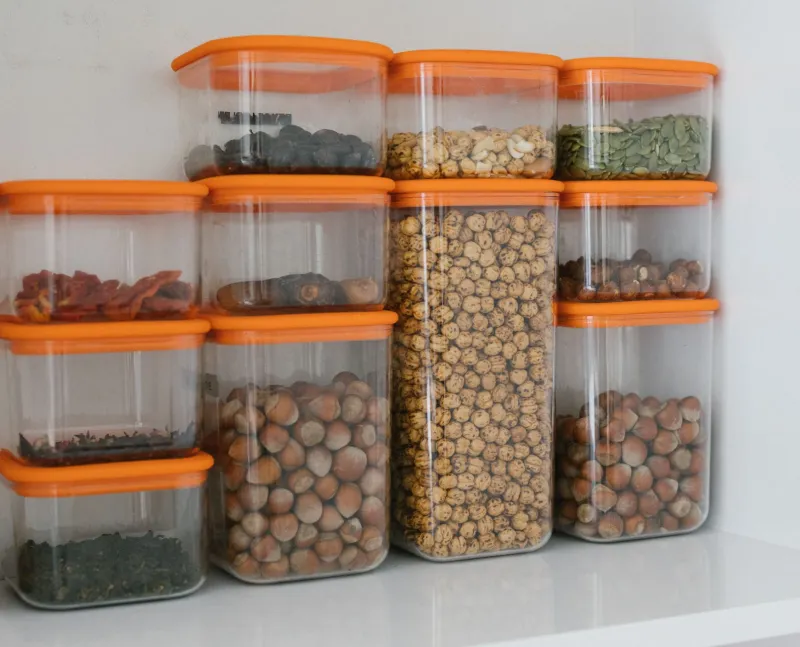
Picture a Saturday afternoon in suburban Florida, sometime in 1949. A group of women are gathered in someone's living room, eating snacks, chatting, and watching a demonstration of food storage containers. Nobody called it a revolution. Nobody called it anything, really. It was just a party. But what happened in living rooms like that one — repeated millions of times across America over the next several decades — quietly set off a chain of consequences that the plastics industry, environmental scientists, and consumer advocates are still untangling today.
A Product Nobody Could Figure Out How to Sell
Earl Tupper had a genuine innovation on his hands in 1946. Working with a flexible, odorless polyethylene plastic — a material derived from a byproduct of oil refining — he had developed a line of lightweight, airtight food storage containers. The seal was the breakthrough: a lid that worked like an inverted paint can lid, creating a near-perfect closure that kept food fresh dramatically longer than anything else available at the time.
There was just one problem. Nobody was buying it.
Tupperware sat on department store shelves and went largely ignored. The product was unfamiliar, the material was strange to the touch, and shoppers had no framework for understanding why it was worth the price. Retail wasn't working. Tupper was stuck.
The answer came not from a marketing executive or an ad agency, but from Brownie Wise, a single mother from Detroit who had been independently selling Tupperware through informal home gatherings and doing remarkably well at it. Wise had stumbled onto something that department stores couldn't replicate: trust. When a neighbor demonstrated the product in your own living room, answered your questions, and let you handle it yourself, the sale almost made itself.
Tupper hired Wise in 1951, pulled Tupperware entirely from retail stores, and handed her the keys to a direct-sales operation built entirely around the home party model. It was an audacious bet, and it paid off spectacularly.
The Party That Changed Everything
By the mid-1950s, Tupperware parties were a genuine cultural phenomenon. Wise became one of the first women to appear on the cover of Business Week magazine in 1954. The company was generating millions in sales annually, almost entirely through a network of independent saleswomen — predominantly homemakers — who hosted or attended parties in residential neighborhoods across the country.
The genius of the model was that it bypassed every traditional retail friction point. There was no shelf to browse past. No price tag to hesitate over. There was a hostess you knew, a room full of neighbors, and a live demonstration that made the product's value immediately obvious. Social pressure did a lot of the heavy lifting that advertising couldn't.
But here's where the accidental part starts.
The Tupperware party model didn't just sell containers. It sold the idea that plastic storage was a domestic essential — something every well-organized American kitchen needed in multiple sizes and configurations. Wise's sales approach emphasized building sets, replacing older pieces, and upgrading to newer designs. The containers were durable, yes, but the culture around them encouraged accumulation.
The Durability Paradox
Tupperware's original pitch was actually an environmental argument before anyone used that language. These containers would replace disposable packaging. Buy once, use forever, waste less. And the products genuinely were built to last — many pieces from the 1950s and 60s are still functional today.
But the cultural template that Tupperware established — plastic as the default material for food storage, containers as collectible and replaceable consumer goods, the party model as a vehicle for continuous purchasing — migrated well beyond Tupperware itself.
As the 1960s became the 1970s and manufacturing costs for plastic dropped dramatically, other companies entered the market with cheaper, thinner, far less durable versions of the same concept. The Tupperware party had taught American consumers to think of plastic containers as kitchen staples. The flood of cheaper alternatives taught them to think of plastic containers as disposable.
By the 1980s, American supermarkets and discount stores were stocked with plastic storage products at price points so low that replacement was easier than repair. The cultural habit of buying plastic containers — normalized by two decades of Tupperware's marketing — had been captured by products designed to be thrown away.
The Numbers That Followed
The U.S. plastics industry grew by roughly 300 percent between 1960 and 1980. A significant portion of that growth was in consumer packaging and food storage — exactly the category Tupperware had pioneered and legitimized. By the time environmental concerns about plastic waste began entering mainstream conversation in the late 1980s and early 1990s, the consumer habit of buying, discarding, and replacing plastic containers was already deeply embedded in American domestic culture.
Recycling programs that launched in this era were, in part, a response to the sheer volume of plastic already circulating through American households. And the specific challenges of recycling flexible and semi-rigid food-grade plastics — the exact materials Tupperware had popularized — remain among the most persistent problems in municipal waste management today.
Brownie Wise, for her part, was forced out of Tupperware in 1958 by Earl Tupper, who sold the company shortly afterward for $9 million and moved to a private island. Wise received no equity, no bonus, and no share of the sale. The woman who built the engine got nothing from the sale of the car.
The Living Room That Started It All
None of this was the plan. Wise wanted to build a sales career and financial independence. Tupper wanted to sell containers. The women who hosted parties wanted to earn a little money and spend an afternoon with neighbors. Nobody in those Florida living rooms was thinking about landfill capacity or microplastic contamination or the downstream consequences of making plastic feel like a household necessity.
But that's exactly how these things tend to work. A clever solution to one problem — how do you sell a product nobody understands? — creates the conditions for a problem nobody anticipated. The Tupperware party didn't cause the plastic crisis on its own. But it wrote the cultural playbook that made plastic containers feel indispensable, and indispensable things have a way of accumulating long after they stop being useful.